 0
0
 0
0
Spiritual Devotional about Spirituality vs. Religion
Title: Embracing the Journey: Spirituality vs. Religion
Hello, beloved friends!
Today, let’s embark on a heart-opening journey to explore a timeless topic that often invites deep contemplation: the relationship between spirituality and religion. In an era brimming with diverse beliefs and practices, understanding these distinct yet intertwined paths can infinitely enrich our walk with God.
The Symphony of Spirit and Faith
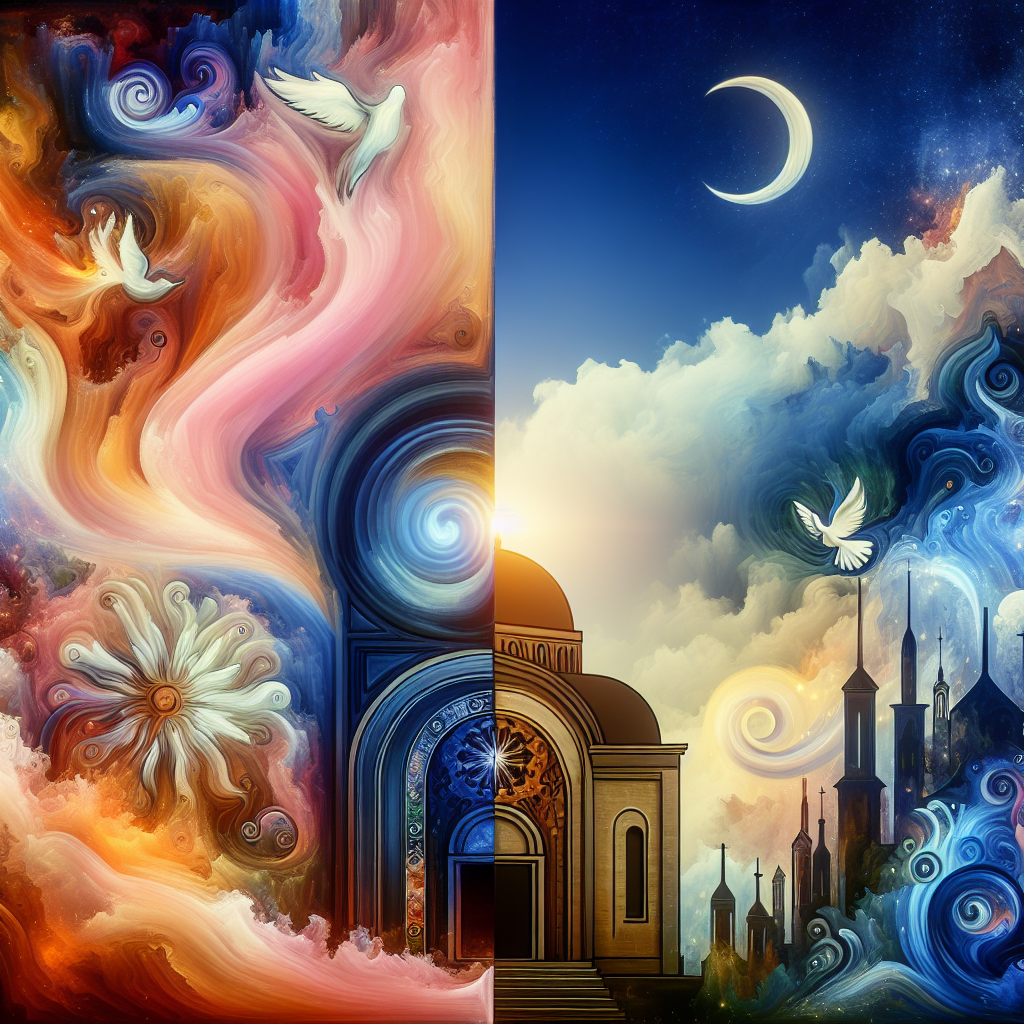
Imagine religion as a beautifully composed piece of music—a symphony of teachings, traditions, and communal worship. It provides structure and a shared heritage, much like the early Christian church depicted in Acts. There, believers devoted themselves "to the apostles’ teaching and to fellowship, to the breaking of bread and to prayer" (Acts 2:42 NIV), finding strength and unity in their collective faith.
Spirituality, then, can be seen as the individual dance inspired by that symphony—a personal connection and exploration of our inner world and relationship with the Divine. While religion offers the path, spirituality invites us to walk it with authentic heartbeats, to "worship in Spirit and in truth" (John 4:24 NIV).
Harmony, Not Opposition
It’s crucial to note that spirituality and religion are not adversaries but companions along our faith journey. Religion can guide and ground us, offering community and continuity. It provides the wisdom of Scriptures, teachings from which we draw like deep wells. Spirituality, on the other hand, reminds us that our personal connection to God is living and dynamic, empowering us to seek His presence in all aspects of our lives.
Consider the Biblical principle shared in Matthew 22:37-39 (NIV), where Jesus distills the essence of the law into two commandments: to love God wholeheartedly and to love our neighbors. Whether through organized religion or personal spiritual practice, the core of our calling remains love—boundless, unconditional, and transformative.
The Dance of Faith
How, then, can we joyfully integrate both spirituality and religion in our daily walk? Here are a few ways to consider:
-
Deepen Your Connection: Engage in daily prayer and meditation, listening for God’s voice. Allow times of quiet reflection to illuminate His presence in your life, inviting the Holy Spirit to guide your understanding.
-
Participate in Community: Cherish the rewards of worship and fellowship. Join a faith community that uplifts your spiritual journey, sharing in both joys and challenges, much like the early Christians supporting one another.
-
Practice Love in Action: Channel your spiritual insights into tangible acts of kindness and compassion. As James 2:14-17 reminds us, faith is alive when accompanied by action.
-
Embrace Continuous Learning: Dive into scripture with fresh eyes. Let every verse, parable, and teaching be a new conversation with the Divine, offering insights both profound and practical.
-
Celebrate Diversity: Revel in the beauty of diverse spiritual expressions and religious traditions around you, understanding that each path can offer a unique glimpse into God’s vast and infinite nature.
Closing Thoughts
So, dear ones, remember that the journey of faith is vast and vibrant, weaving together threads of spirituality and religion into a tapestry that tells the story of our relationship with God. Embrace this harmony with open arms, and let your spiritual and religious practices be beautifully interwoven—a living testimony to the joy, peace, and love that flows from our Creator.
May your days be filled with divine wonder and may your heart continue to seek and find the eternal embrace of God.
Blessings and love always,
[Your Name]
Explore and dig up answers yourself with our BGodInspired Bible Tools! Be careful – each interaction is like a new treasure hunt… you can get lost for hours 🙂
Q&A about Spirituality vs. Religion
Certainly! Below is an example of a Q&A discussing the differences and relationships between spirituality and religion.
Q: What is the fundamental difference between spirituality and religion?
A: The fundamental difference lies in the nature and structure of the experience. Spirituality is often described as an individual practice that focuses on personal growth, inner peace, and a connection to something bigger than oneself, which may or may not include belief in a deity. In contrast, religion typically involves organized beliefs, practices, rituals, and community that are shared among a group, often centered around belief in one or more deities.
Q: Can someone be spiritual without being religious?
A: Yes, many people identify as spiritual without adhering to a specific religion. They may explore different philosophies, practices, or teachings that resonate with them personally, such as meditation, mindfulness, or ethical living, without following a structured set of religious beliefs or attending organized religious services.
Q: How can religion and spirituality complement each other?
A: Religion and spirituality can complement each other by fulfilling both communal and personal spiritual needs. A religious framework can provide community, tradition, moral guidance, and structured practices, while spirituality allows for a personal, introspective journey and direct personal experience. Together, they can create a balanced approach to understanding life’s big questions and one’s own place in the universe.
Q: Why do some people feel more connected to spirituality rather than religion?
A: Some individuals may find spirituality more appealing because it allows for a more personal and flexible approach to connecting with the sacred or the transcendent. Without the constraints of doctrine or dogma, individuals can tailor their spiritual practices to align with their personal beliefs, experiences, and needs. This can be particularly appealing in a multicultural and pluralistic society where diverse spiritual perspectives are accessible.
Q: Can organized religion be viewed as a form of spirituality?
A: Yes, organized religion can indeed be viewed as a form of spirituality. For many practitioners, religious rituals, community involvement, and adherence to religious teachings are deeply spiritual experiences that provide a sense of purpose, connection, and understanding of the divine. In this sense, religion can be a specific pathway within the broader spectrum of spirituality.
Q: How do spirituality and religion address life’s existential questions?
A: Both spirituality and religion aim to address existential questions such as the meaning of life, the nature of reality, and what happens after death. Religion often provides specific answers to these questions grounded in sacred texts, traditions, and teachings. Spirituality, on the other hand, may offer a more open-ended exploration, allowing individuals to seek their own answers through personal insight, experience, and reflection.
Q: Are meditation and prayer considered spiritual practices, religious practices, or both?
A: Meditation and prayer can be both spiritual and religious practices, depending on the context. In a religious setting, they might be practiced in accordance with specific doctrines, rituals, or traditions. As spiritual practices, they can be more flexible and tailored to the individual’s personal beliefs and spiritual interests. Both serve as tools for inner exploration, connection, and transformation.
This Q&A aims to provide a broad perspective on the concepts of spirituality and religion while acknowledging their overlaps and distinct qualities.