 0
0
 0
0
Spiritual Devotional about Sacred Music
Harmonies of Heaven: The Transformative Power of Sacred Music
Hello, dear friends! Today, we’re diving into the uplifting realm of sacred music—a spiritual bridge that connects our hearts to the divine, offering comfort, inspiration, and a sense of oneness with God. From the gentle hum of a hymn to the soaring notes of a choral symphony, sacred music has the unique ability to transform our souls and uplift our spirits.
Music in all its forms is a divine gift, a universal language that transcends boundaries and opens the portals of Heaven. In the Bible, music is not just an accompaniment to moments of joy and sorrow; it is a powerful act of worship and an expression of faith. The Psalms, often referred to as the Bible’s hymnal, are a testament to this. Psalm 150:1-6 invites us to “Praise the Lord in his sanctuary; praise him in his mighty heavens… Let everything that has breath praise the Lord!” These verses remind us that music, imbued with divine inspiration, is a mighty tool for worship.
Sacred music is more than melodies and lyrics; it’s an experience that engages the heart, mind, and soul. Think of King David, who danced before the Lord with all his might (2 Samuel 6:14), wholly enraptured by the spirit of worship through music. David’s dedication teaches us that music is not merely about skill or performance; it is a heartfelt expression of love and reverence for our Creator.
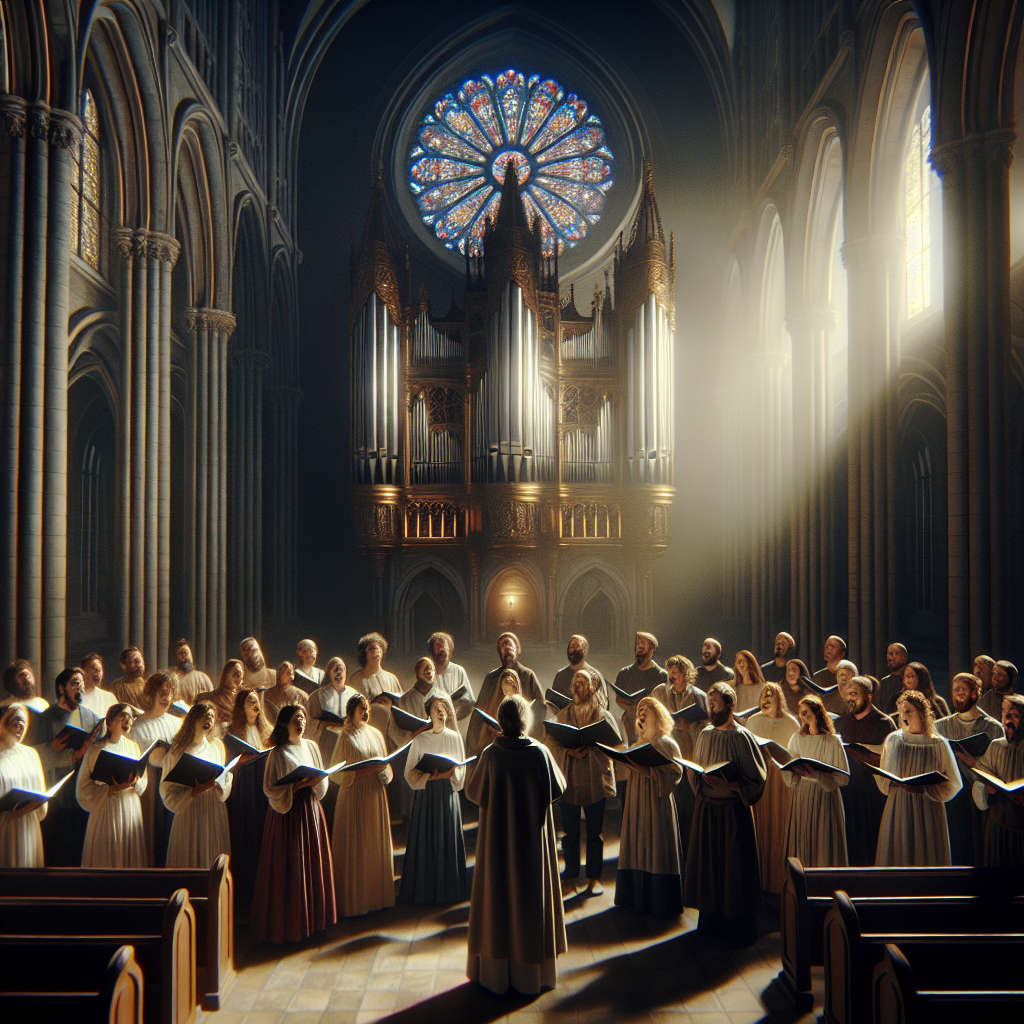
The church has long recognized music as a means of connecting believers to God. Whether it is the majestic resonance of an organ, the joyful noise of a gospel choir, or the soothing call of a hymn echoing through a congregation, music nurtures our communal and personal spiritual journeys. It draws us into an intimate dialogue with the divine, opening our eyes to the grandeur of God’s love and grace.
In our everyday lives, we can invite sacred music to accompany us on our spiritual journey. Whether you listen to a playlist of contemporary Christian artists or harmonize with ancient chants of the Gregorian monks, the Holy Spirit moves through every note, offering peace and encouragement. Sacred music has a wonderful way of meeting us exactly where we are—our moments of joy and triumph, our times of struggle and solace. It whispers the promises of God’s unwavering love and leaves us with a renewed sense of hope.
Moreover, sacred music serves as a bridge, bringing people of diverse backgrounds and beliefs together under the mantle of shared faith and worship. When we join our voices in song, we are reminded of the unity we have in Christ. As Ephesians 5:19 encourages us, “Speak to one another with psalms, hymns, and songs from the Spirit. Sing and make music from your heart to the Lord.” What a beautiful reminder that music is not only for personal edification but also for communal bonding!
As we conclude, dear friends, let us embrace the transformative power of sacred music in our lives. May it inspire us to live in harmony with God’s will, magnify His presence in our lives, and become a source of joy and peace. Let’s keep our hearts open, our spirits high, and our voices strong in singing praises to our gracious and loving God.
Until next time, let us resonate with the harmonies of Heaven, allowing sacred music to guide our steps and lift our souls. Amen!
Explore and dig up answers yourself with our BGodInspired Bible Tools! Be careful – each interaction is like a new treasure hunt… you can get lost for hours 🙂
Q&A about Sacred Music
Q1: What is sacred music?
A1: Sacred music is a genre that is primarily composed for religious or spiritual ceremonies and gatherings. It is often associated with worship and is used to enhance spiritual experience and reflection. This type of music is found across various religions and cultures, often incorporating traditional or liturgical texts.
Q2: How does sacred music differ from secular music?
A2: Sacred music is designed for religious or spiritual contexts, often with lyrics or themes that reflect religious stories, teachings, or practices. Secular music, on the other hand, is intended for non-religious settings and typically deals with everyday human experiences, social themes, or entertainment.
Q3: What are some examples of sacred music traditions?
A3: There are numerous sacred music traditions across different cultures and religions, such as Gregorian chant in the Christian tradition, Qawwali in Sufism, Kirtan in Hinduism, and Shomyo in Buddhism. Each of these traditions has its own unique styles, instruments, and historical development.
Q4: What role does sacred music play in religious services?
A4: In religious services, sacred music serves several roles: it helps create an atmosphere conducive to worship, facilitates communal participation, aids in the memorization and reflection of sacred texts, and can inspire emotional and spiritual upliftment.
Q5: Can sacred music be performed outside of a religious setting?
A5: Yes, sacred music can be performed outside of religious settings, such as in concerts or cultural festivals. It often appeals to a wide range of audiences who appreciate its historical significance, aesthetic beauty, or the universal emotions it conveys.
Q6: How has sacred music evolved over time?
A6: Sacred music has evolved alongside cultural, technological, and theological changes. Historical periods, such as the Renaissance and Baroque, saw significant developments in musical complexity and style. Today, sacred music continues to evolve, incorporating contemporary musical elements and addressing modern spiritual themes.
Q7: Who are some notable composers of sacred music?
A7: Notable composers of sacred music include Johann Sebastian Bach, whose compositions like the "Mass in B minor" and "St. Matthew Passion" are celebrated works. Other composers include Thomas Tallis, Giovanni Pierluigi da Palestrina, and more contemporary figures such as Arvo Pärt and John Tavener.