 0
0
 0
0
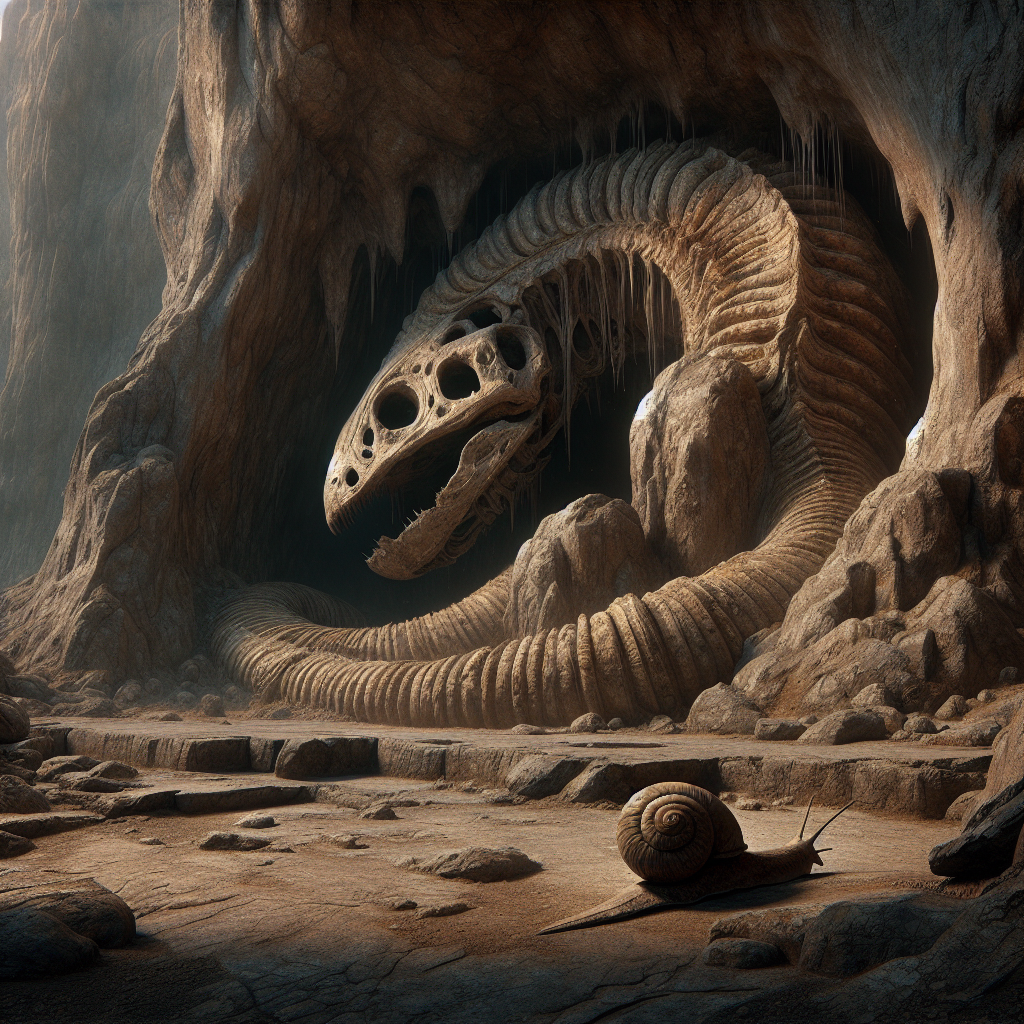
Snail-Crushing Colossus: Scientists Discover World’s Largest Worm Lizard Fossil
In a remarkable find that reshapes our understanding of ancient ecosystems, paleontologists have unveiled the world’s largest worm lizard fossil, nicknamed the “snail-crushing colossus.” This astonishing discovery opens a window into a prehistoric landscape, offering clues about the ecological dynamics that once thrived millions of years ago.
This colossal creature, stretching over a meter in length, possessed powerful jaws and a strong build, traits that allowed it to feast on snails and other small invertebrates. The fossil, uncovered in diverse sediment layers, indicates that these lizards varied significantly from their modern relatives and played an essential role in their habitats.
The team of researchers, led by esteemed paleontologist Dr. Annelise Kuhlmann, emphasizes the fossil’s contribution to our understanding of evolutionary biology. “Not only does this discovery provide insights into the morphology and behavior of these lizards, but it also reflects the intricate connections within ecosystems,” Kuhlmann said. She further highlights the importance of studying such fossils to better understand how current habitats function.
As the discovery prompts excitement within the scientific community, it also invites a reflection on the Creator’s intricate design. The complexity and adaptability of life seem to echo the biblical truth found in Genesis 1:25, which states, “God made the wild animals according to their kinds, the livestock according to their kinds, and all the creatures that move along the ground according to their kinds.” This verse underscores a profound respect for the majesty of creation, resonating with the idea that each entity, no matter how small or seemingly insignificant, has a purpose in the grand tapestry of life.
Moreover, as we marvel at such findings, it can inspire us to appreciate not only the scientific aspects of our world but also the spiritual truths that connect us to it. Jesus often taught about the value of all creation, mentioning in Matthew 6:26, “Look at the birds of the air; they do not sow or reap or store away in barns, and yet your heavenly Father feeds them.” This principle offers a comforting reminder of our small yet significant place within a much larger picture, where everything is interrelated and nurtured by divine care.
In conclusion, the discovery of this gigantic worm lizard challenges us to reflect on both our natural world and our spiritual lives. As we expand our understanding of ancient life, let us also acknowledge the Creator’s hand in design, urging us toward stewardship and appreciation for all living things.
As you ponder this extraordinary find, consider how you might deepen your connection to creation in your daily life. Embrace the opportunity for wonder, and remember that, just as every creature has its place, so do you in the heart of God’s creation.
Explore and dig up answers yourself with our BGodInspired Bible Tools! Be careful – each interaction is like a new treasure hunt… you can get lost for hours 🙂