 0
0
 0
0
Title: South Korean Assembly Blocks Martial Law Amid Tensions: A Reflection on Leadership and Justice
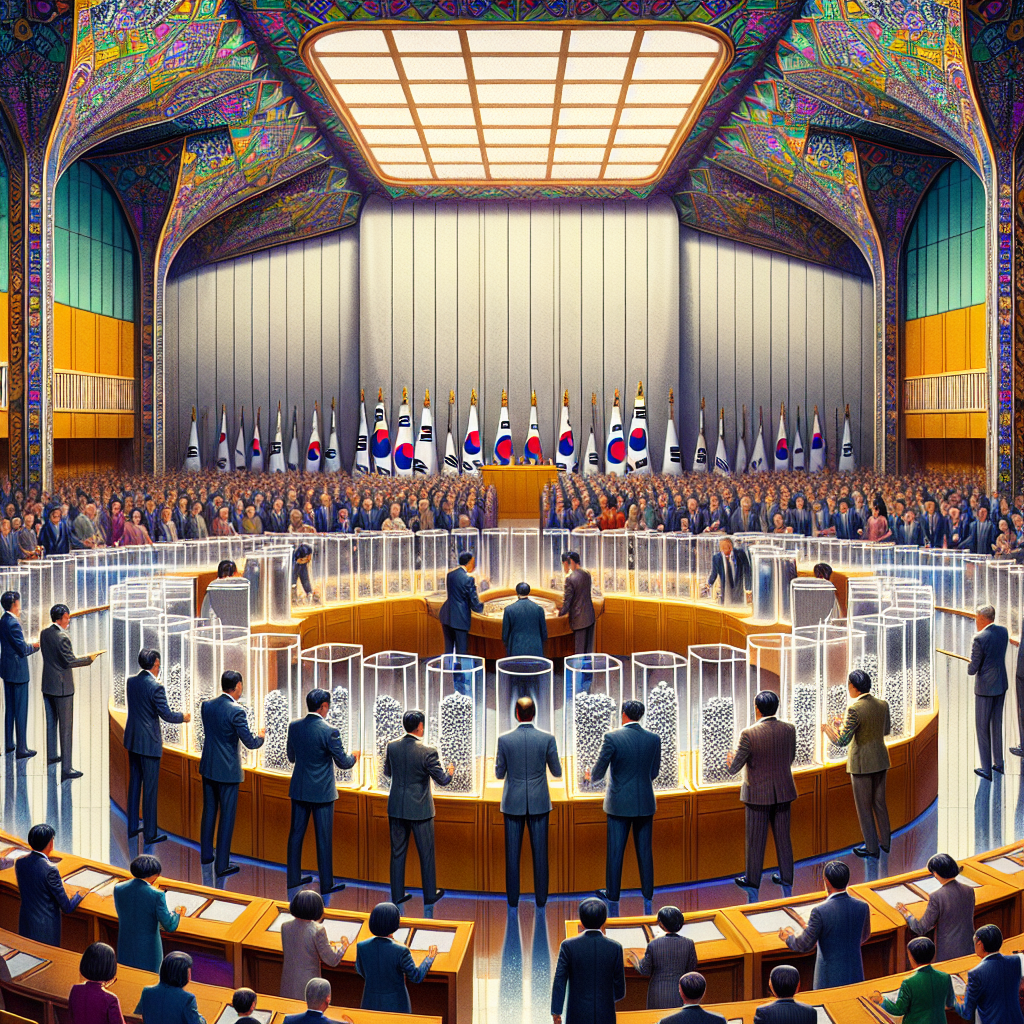
In a historic confrontation, South Korea’s national assembly has decisively voted to reject President Yoon Suk Yeol’s declaration of martial law, signaling a deepening political crisis and a struggle for authority that reverberates across the nation. The parliamentary vote came shortly after Yoon accused the left-wing majority of plotting rebellion and harboring sympathies for North Korea in a dramatic televised address, claiming that this extraordinary measure was necessary to restore order.
As soldiers were deployed to surround the parliament building in a stark display of military presence, lawmakers inside worked quickly to counter the president’s controversial decree. The vote against martial law, unique since the establishment of democracy in South Korea in 1987, underscores the delicate balance of power and responsibility that exists within governing bodies.
Reflecting on this episode, one cannot overlook the Biblical framework regarding authority and justice. Romans 13:1 states, "Let everyone be subject to the governing authorities, for there is no authority except that which God has established." This scripture emphasizes the importance of leaders acting justly and with integrity to uphold societal order—a charge that, in this tense moment, appears to be under scrutiny.
President Yoon’s martial law declaration included stringent measures restricting political activity, media control, and the potential suppression of dissent, actions reminiscent of authoritarian regimes. As he contemplates a path forward—one that many are eager to challenge—his leadership is called into question. Yoon’s own party leader, Han Dong-hoon, implored the military to withdraw, declaring that "martial law has lost its effect," a statement reinforcing the notion that authority can only be wielded justly to be respected.
Opposition leaders have likened Yoon’s actions to a revival of past military-dominated governance, calling his approach a dangerous gamble that risks not just the democratic fabric but also international relationships, notably with the United States. The White House has expressed serious concern, which could further complicate Yoon’s position as he navigates this precarious terrain.
As tensions rise, it’s vital to remember that constructive discourse and understanding are foundational principles taught by Jesus. In Matthew 5:9, it states, "Blessed are the peacemakers, for they will be called children of God." This call emphasizes the value of pursuing peace over conflict, urging leaders and citizens alike to seek restoration and dialogue rather than division.
In the midst of such turmoil, it invites us to consider: how can we be agents of peace and justice in our own lives and communities? While political leaders grapple with their responsibilities, we are called to embody truth and integrity in our interactions, no matter the sphere.
As this situation evolves, let us be encouraged to reflect on our roles as peacemakers, striving for understanding and unity in a world often marked by strife. In a time of uncertainty, our commitment to these principles may, in time, yield a more harmonious society.
Explore and dig up answers yourself with our BGodInspired Bible Tools! Be careful – each interaction is like a new treasure hunt… you can get lost for hours 🙂