 0
0
 0
0
Spiritual Devotional about Spirituality vs. Religion
Title: Embracing the Journey: Spirituality and Religion as Harmonious Guides
Hello, Dear Friends!
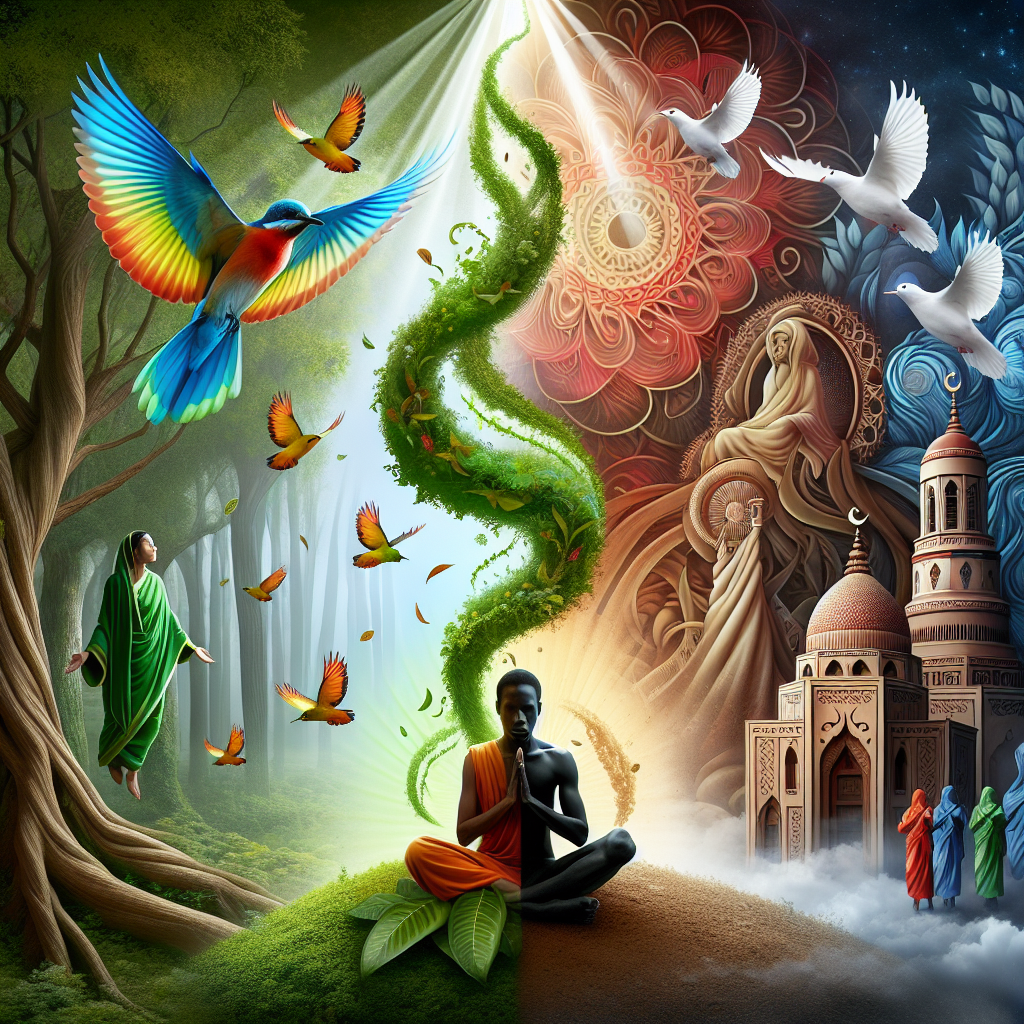
Today, I’m thrilled to explore a topic that’s close to my heart and resonates with so many of us on our individual journeys: Spirituality vs. Religion. Though often seen as opposing forces, these two can intertwine beautifully, guiding us towards a more profound understanding of our purpose and connection with the divine.
At its core, spirituality is a deeply personal experience. It’s our own intimate relationship with the Creator, one filled with wonder, curiosity, and love. It allows us to sense the divine not just in grand cathedrals or sacred texts but also in the sunrise, the laughter of children, and the whisper of the wind through the trees. Spirituality invites us to listen to the still, small voice within ourselves, echoing the words of Psalm 46:10: "Be still, and know that I am God."
On the other hand, religion provides structure and community. It’s a shared journey, a collective faith walk that offers guidance, tradition, and a sense of belonging. The rituals and teachings of religion can be like a lifeline, offering clarity and wisdom handed down through generations. Consider Hebrews 10:24-25, which encourages us: "And let us consider how we may spur one another on toward love and good deeds, not giving up meeting together, as some are in the habit of doing, but encouraging one another—and all the more as you see the Day approaching."
So, how do we reconcile the personal freedom of spirituality with the communal roots of religion? By seeing them as complementary rather than contradictory. Spirituality gives us the wings to explore and express our divine connection, while religion provides the roots to ground us in shared truths and values.
The story of Jesus often embodies this harmony. Though a central figure in Christianity, Jesus lived a life that merged deep spiritual insight with religious practice. He taught in synagogues, yet also retreated to the mountains for solitary prayer. He respected the traditions of his faith while fostering a direct, transformative relationship with God, showing us how spirituality and religion can enrich our lives together.
In embracing both, we are invited to explore what is sacred within us and in the world, while remaining anchored to the enduring wisdom of our faith communities. Let’s thrive in the tension, using it to grow stronger and more compassionate.
Here’s an invitation to you, dear reader: whether you find solace in the quiet moments of spirituality or the lively gathering of a religious congregation, let both paths fill your heart with joy and guide your steps with purpose. After all, each is a reflection of God’s infinite love, reaching out to us in unique and profound ways.
May your journey, be it spiritual, religious, or an inspiring blend of both, be blessed with peace, growth, and unending joy.
Explore and dig up answers yourself with our BGodInspired Bible Tools! Be careful – each interaction is like a new treasure hunt… you can get lost for hours 🙂
Q&A about Spirituality vs. Religion
Question 1: What is the primary distinction between spirituality and religion?
Answer:
The primary distinction lies in structure and practice. Spirituality is a broad, individualized experience that involves the personal quest for meaning, purpose, and connection to something greater than oneself. It is often intuitive, personal, and subjective. Religion, on the other hand, refers to an organized system of beliefs, practices, and rituals often centered around a specific doctrine or the teachings of a spiritual leader. Religion typically involves a community of followers and a formalized set of behaviors and codes.
Question 2: Can someone be spiritual without being religious?
Answer:
Yes, someone can be spiritual without being religious. Many individuals find spiritual fulfillment outside of organized religion by forming their own beliefs and practices. These individuals may engage in meditation, nature retreats, or philosophical contemplation, seeking personal growth and understanding without adhering to a particular religious framework.
Question 3: Are there any overlaps between spirituality and religion?
Answer:
Certainly, there are overlaps. Both spirituality and religion can provide individuals with a sense of peace, purpose, and belonging. They often embrace similar moral teachings and ethical frameworks. Many religions also encompass spiritual practices, such as prayer and meditation, which foster a deeper connection to the divine or transcendent.
Question 4: How does each approach handle questions of existence and the afterlife?
Answer:
Religion typically provides specific teachings and narratives about existence and the afterlife, often involving sacred texts, doctrines, or revelations from spiritual leaders. These teachings offer followers a clear path and understanding. Spirituality, however, may allow for more open-ended exploration of these questions, encouraging personal interpretation and belief without the constraints of a particular doctrine.
Question 5: Can organized religion restrict spiritual exploration?
Answer:
In some cases, organized religion might limit spiritual exploration by prescribing strict doctrines and practices that followers must adhere to. This could stifle personal spiritual growth or exploration that deviates from established norms. However, many religious traditions also encourage deep spiritual development within their frameworks and support the quest for personal connection to the divine.
Question 6: How do people typically express spirituality outside of a religious context?
Answer:
Outside of religion, people might express spirituality through activities that promote reflection, a sense of oneness, or personal enlightenment. These can include meditation, yoga, mindfulness, art, music, spending time in nature, or engaging in acts of kindness and service. Such practices allow individuals to explore their inner selves and find meaning without adhering to a specific religious tradition.
Question 7: Can engaging in religious practices enhance one’s spiritual experience?
Answer:
Yes, engaging in religious practices can certainly enhance one’s spiritual experience. For many, participating in communal worship, rituals, and sacraments deepens their connection to their spirituality. It provides a sense of community, shared identity, and support, as well as guiding ethical and moral decisions. The structure of religion can help individuals cultivate a disciplined spiritual life and experience a collective spirituality.