
 0
0
 0
0
Spiritual Devotional about Spirituality vs. Religion
Embracing the Divine: Spirituality vs. Religion
Hello, dear friends and seekers of truth! Today, let’s embark on a joyous exploration of two interconnected paths that guide our souls towards the light—Spirituality and Religion. As we delve into these concepts, let us open our hearts to understand, appreciate, and embrace the unique yet harmonious roles they play in our lives.
Understanding the Essence
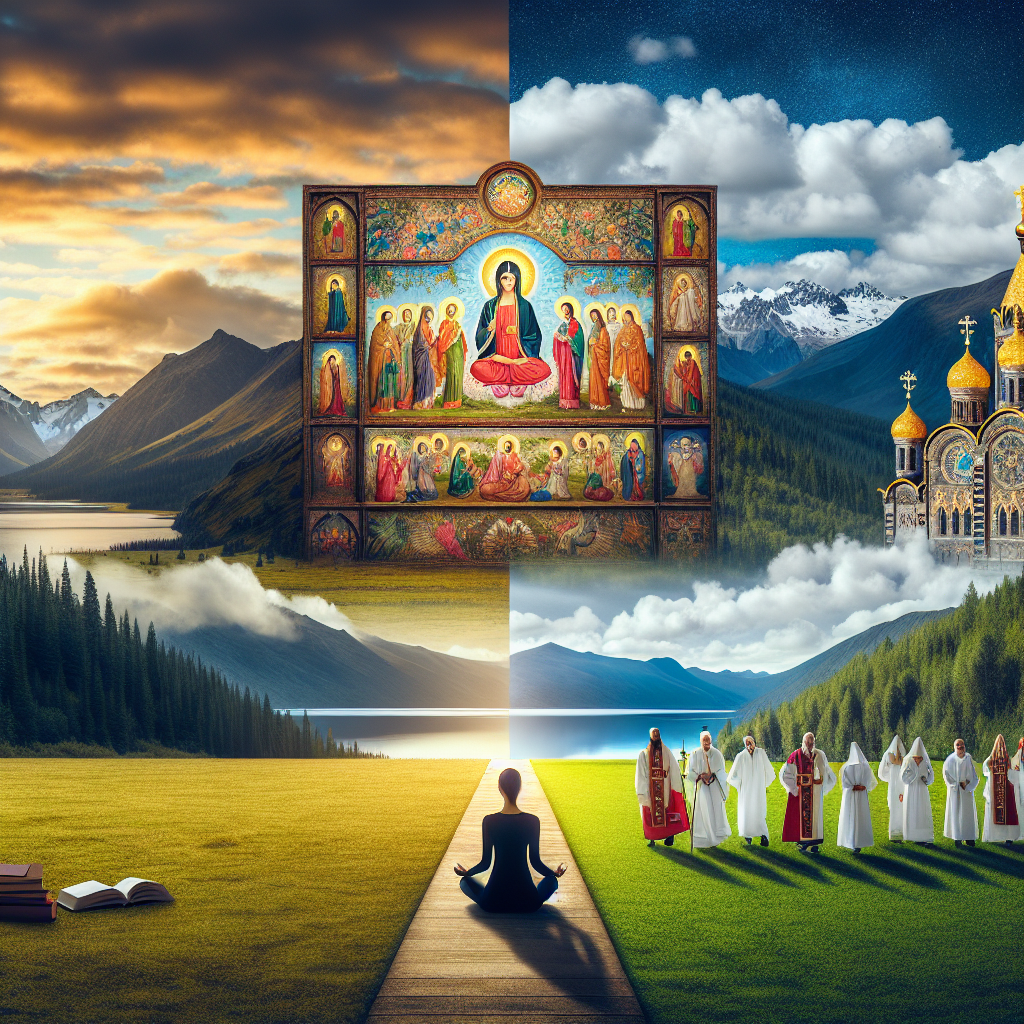
At its core, spirituality is a deeply personal and individual journey of seeking connection with the Divine. It is the exploration of profound truths and an intimate relationship with God that surpasses organized rituals and traditions. On the other hand, religion provides structure, community, and a shared set of beliefs that help nurture and guide our spiritual journey.
In the Bible, we find a beautiful balance between these two concepts. Jesus’ teachings emphasize a personal, inner relationship with God, as seen in John 4:24—"God is spirit, and His worshipers must worship in the Spirit and in truth." Here, Jesus speaks to the essence of spirituality, encouraging a genuine connection with God that transcends physical boundaries.
Yet, throughout the New Testament, we also see the importance of gathering together in faith, supporting one another, and learning through shared beliefs, as described in Hebrews 10:24-25—"And let us consider how we may spur one another on toward love and good deeds, not giving up meeting together, as some are in the habit of doing, but encouraging one another."
Harmonizing the Paths
While some may feel drawn more towards the personal exploration of spirituality, others may find comfort and strength in the communal aspects of religion. But, dear friends, the beauty lies in recognizing that these paths aren’t mutually exclusive. They are harmoniously woven together, offering us the breadth and depth of experience needed for our spiritual growth.
Spirituality calls us to experience the wonder of God’s presence in our daily lives, to listen to His whispers in the stillness, and to express our faith through love, kindness, and service. Religion, meanwhile, provides us with the rich tapestry of stories, traditions, and teachings that connect us with generations of believers, offering guidance and wisdom.
The Empowering Journey
Let us be inspired by the lives of biblical figures who embodied both personal spirituality and shared religious practice. Consider King David, whose psalms are a testament to his profound personal relationship with God, and yet, he also established practices for worship and community gathering in Israel.
Embrace the path that resonates with you, knowing that both spirituality and religion lead us to the same destination—communion with the Divine. Whether you find God in the silence of meditation or the hymns of a congregation, in the pages of Scripture or the quiet beauty of nature, remember that He is always near, ready to meet you where you are.
In this journey, may we become more loving, compassionate, and united in our faith. Let’s encourage each other in our unique paths, celebrating the diversity of our spiritual journeys while cherishing the shared essence of our faith. May your heart be filled with peace, knowing that God’s love encompasses all paths, guiding us steadily toward His eternal embrace.
Stay blessed, and may your journey be filled with light and joy!
Explore and dig up answers yourself with our BGodInspired Bible Tools! Be careful – each interaction is like a new treasure hunt… you can get lost for hours 🙂
Q&A about Spirituality vs. Religion
Certainly! Here’s a Q&A that explores some of the key distinctions and commonalities between spirituality and religion:
Q1: What is the main difference between spirituality and religion?
A1: Spirituality is often seen as a personal and individual experience of the sacred or the divine, emphasizing one’s inner path. It allows for a broader interpretation of spiritual beliefs and practices, often not confined to any specific dogma or tradition. Religion, on the other hand, is usually an organized system of beliefs, practices, and rituals that are shared by a community. It often involves established doctrines and a structured belief system concerning the nature of the divine, moral conduct, and the meaning of life.
Q2: Can someone be spiritual but not religious?
A2: Yes, many people identify as spiritual but not religious (often abbreviated as SBNR). They might seek personal growth, connection with nature, or a sense of peace and purpose outside the framework of organized religion. This might involve meditation, mindfulness, yoga, or other personal practices that help them connect with their inner selves or the universe.
Q3: How do religions typically view spirituality?
A3: Most religions recognize and highly value spirituality, considering it an essential component of religious life. Many religious teachings focus on nurturing one’s spiritual growth alongside following religious rituals and community practices. However, the relationship between spirituality and religious practice can vary greatly between different faiths and traditions.
Q4: Does spirituality involve belief in a higher power?
A4: Spirituality can include belief in a higher power, but it does not necessarily have to. While some spiritual people believe in God, a universal spirit, or other metaphysical entities, others might see spirituality more as a way of connecting with the universe, nature, or their inner selves without attributing it to a specific deity.
Q5: How do people typically express their spirituality?
A5: People express their spirituality in diverse ways, each unique to their beliefs and experiences. Common expressions include prayer, meditation, yoga, nature walks, artistic endeavors, acts of kindness, or any other practice that fosters a sense of peace, connection, and deeper understanding of the self and the world.
Q6: Can religion and spirituality coexist harmoniously?
A6: Yes, religion and spirituality can coexist harmoniously. Many religious individuals incorporate spirituality into their practice as a means to deepen their faith and personal connection with the divine. Religion can provide a communal structure and shared traditions, while spirituality can offer a personal, experiential dimension that enhances religious life.
Q7: What challenges might arise when considering spirituality and religion together?
A7: Challenges might arise in contexts where organized religions discourage practices or beliefs outside their doctrine, potentially leading to conflicts for those who wish to explore spirituality beyond traditional boundaries. Additionally, misunderstanding or lack of acceptance between individuals who identify strictly with religion and those who are more spiritually inclined can create tensions. Encouraging open dialogue and mutual respect is essential in navigating these challenges.
Feel free to expand upon or modify these questions and answers based on the context in which you’re exploring spirituality and religion!



