
 0
0
 0
0
Genesis and the Cosmos: Bridging Biblical Narratives with Scientific Discoveries
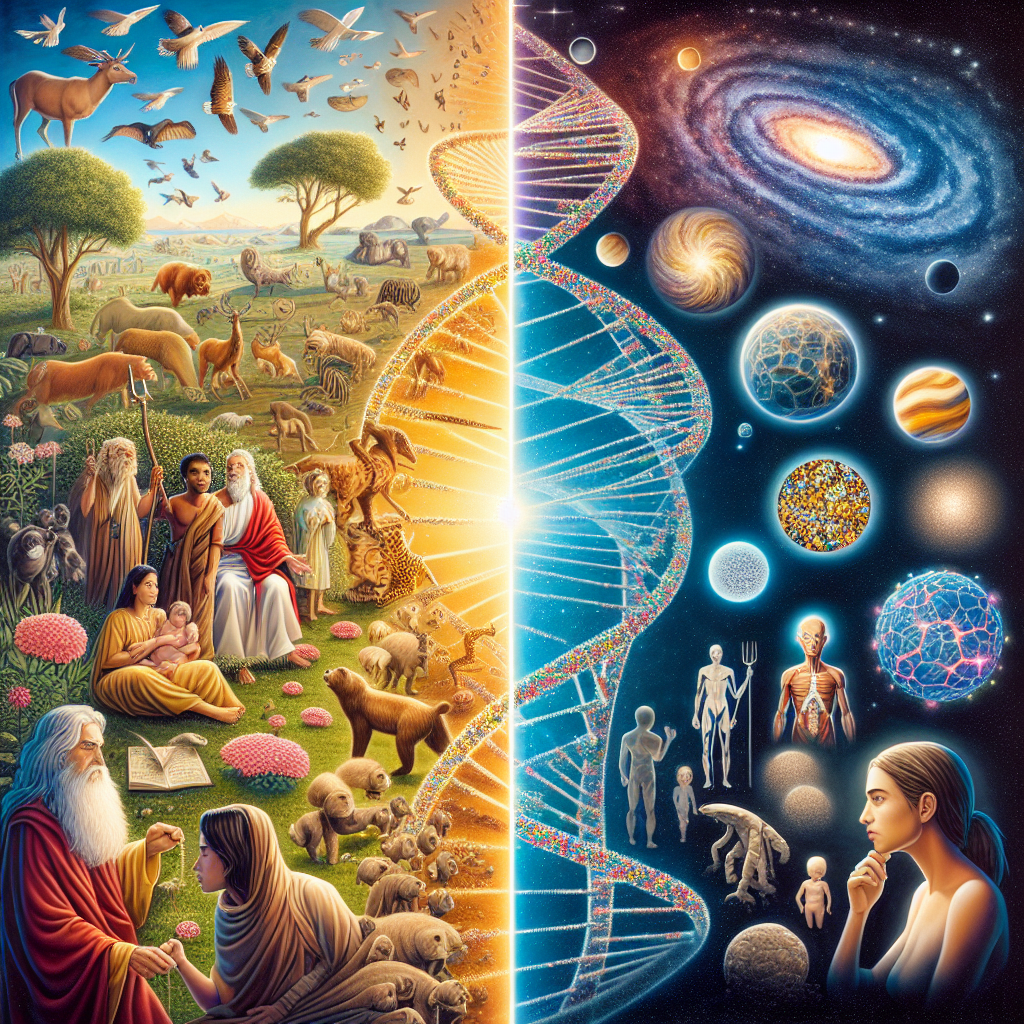
In a world where science and faith are often viewed as opposing forces, the threads of poetic narrative in the Book of Genesis can offer a profound bridge to modern scientific discoveries. The ancient text, rich in symbolism and meaning, invites us to explore creation not only through the lens of spirituality but also through the remarkable findings of contemporary science. This union of faith and reason can enrich our understanding of existence and inspire a deeper appreciation for both our spiritual heritage and the natural world.
The Genesis Narrative: A Framework of Creation
The Book of Genesis opens with a powerful declaration: "In the beginning, God created the heavens and the earth" (Genesis 1:1). This portrayal of creation is not merely an ancient cosmology but rather a narrative that invites reflection on the grandeur of the universe and our place within it. Across its poetic verses, Genesis articulates themes of order, diversity, and purpose—all of which resonate with scientific explorations today.
Genesis presents a structured account of creation that unfolds over seven days. Each day culminates in a declaration of goodness. This rhythm mirrors the scientific concept of order in the universe—the laws of physics that govern motion, energy, and life itself. A study of cosmology reveals that the universe began with a singular event: the Big Bang. This scientific explanation, couched in temporal and physical parameters, can intriguingly coexist alongside the biblical narrative, suggesting that the majestic unfolding of creation might be the work of a divine architect.
Cosmic Discoveries and Biblical Imagery
The evolution of our understanding of the cosmos has been exhilarating. Advances in astronomy and physics have unveiled a universe far grander than early humanity could have imagined—filled with billions of galaxies, each home to countless stars and planets. This endless expanse invites awe, echoing the sentiment found in Psalms, "The heavens declare the glory of God; the skies proclaim the work of his hands" (Psalm 19:1).
Furthermore, the discovery of exoplanets—planets beyond our solar system—has ignited both the scientific community and the public’s imagination. As we ponder the possibility of life on these distant worlds, we may recall the Genesis narrative, where God creates life in its myriad forms. This encourages us to embrace the idea that the divine could be present in diverse expressions of life throughout the universe.
Evolution and the Divine Plan
A central point of contention between faith and science has been the topic of evolution. However, a more profound understanding reveals that evolution, far from diminishing the story of creation, can enhance it. In Genesis, we see God’s breath animating humanity, forming us "in His image" (Genesis 1:27). This can be seen as synonymous with the process of evolution—an ongoing journey through which life develops complexity over time.
Scientists like Francis Collins, who led the Human Genome Project, exemplify how faith and science can harmoniously coexist. Collins argues that evolutionary biology doesn’t negate the belief in a Creator. Rather, it aligns with the notion that God may work through natural processes. This reconciliation highlights the idea that understanding the intricate mechanisms of evolution can deepen our relationship with the divine, reflecting a God who is continually engaged in the world.
Ethical Reflection and Environmental Stewardship
The convergence of Genesis with scientific discovery encourages a call to stewardship. Genesis emphasizes humanity’s role in tending to creation: "Fill the earth and subdue it" (Genesis 1:28). This notion of stewardship becomes incredibly pertinent as we confront environmental challenges today. Scientific discoveries about climate change, biodiversity loss, and pollution can be interpreted not as threats to faith, but as a charge for believers to act responsibly.
By fostering a harmonious relationship with the environment, we fulfill the divine mandate to care for creation, embodying the values of stewardship and reverence. Faith-based initiatives led by communities around the world, advocating for ecological conservation and sustainable living, illustrate how Genesis and scientific understanding can work together to inspire positive action.
Conclusion: A Harmonious Journey
In bridging Biblical narratives with scientific discoveries, we uncover a rich tapestry woven from ancient wisdom and modern understanding. The cosmos, with its dazzling complexities and boundless mysteries, invites us to explore both the text of Genesis and the revelations of science in a spirit of curiosity and reverence.
This journey reminds us that faith and reason are not enemies, but companions—each illuminating the other. As we navigate the complexities of existence, let us embrace the beauty of creation, inspired by the profound truths found in both Scripture and the natural world. In doing so, we can cultivate a worldview that celebrates the grandeur of the cosmos while fostering a deep sense of purpose and connection to the divine.
Explore and dig up answers yourself with our BGodInspired Bible Tools! Be careful – each interaction is like a new treasure hunt… you can get lost for hours 🙂



