 0
0
 0
0
Say “halcyon days” today and most people think of the past.
The summer you were nine. The first little room you ever rented. A season that felt golden, and is gone now.
That is what the phrase means today. But the halcyon days meaning started somewhere very different. It was not a memory of good times at all. It was a calm that showed up in the middle of the worst weather of the year.
If you are in a hard season right now, that older meaning may be the one you need. Here is the story behind it, what real kingfishers actually do, and the small detail that most retellings leave out.
Halcyon Days Meaning: The Short Answer
Today, “halcyon days” means a happy, peaceful time in the past that people remember with longing. The phrase comes from ancient Greece, where it meant a stretch of calm days in the middle of winter, when the sea was believed to go still so a bird called the halcyon could hatch its eggs.
Here is how people use it now:
- “Those were the halcyon days of our first flat.”
- “She still talks about the halcyon days before the factory closed.”
- “It was a halcyon summer. Nobody had a care in the world.”
Notice which way the modern phrase faces. It looks backward. It is a word for “back then.”
Hold on to that. Because the first people who used it were not looking back at all.
The Myth Behind Halcyon Days: Alcyone and Ceyx
The word “halcyon” comes from a woman in Greek myth named Alcyone. The Roman poet Ovid tells her story in his long poem, the Metamorphoses, written about two thousand years ago.
Alcyone was married to a king named Ceyx. They loved each other very much. One day Ceyx decided to cross the sea to visit a far-off temple. Alcyone begged him not to go. She was the daughter of Aeolus, the keeper of the winds, and she knew how wild the sea could be.
He went anyway. A storm broke his ship apart, and he drowned.
When his body washed in on the waves, Alcyone ran into the sea to reach him. In Ovid’s telling, the gods were moved by her grief. They turned both of them into seabirds, so they could stay together.
Then comes the part that gave us the phrase. Every winter, Ovid says, there are seven calm days when Alcyone sits on her nest floating on the open sea. Her father Aeolus holds the winds back. The water goes still. And her young are kept safe until they hatch.
Fourteen Days in the Dead of Winter
Ovid was not the first to write about this. More than three hundred years before him, the Greek thinker Aristotle wrote about the halcyon in his book on animals.
He said the halcyon breeds around the winter solstice. That is the shortest, darkest day of the year. When that time is calm, he wrote, people give the name “halcyon days” to the seven days before the solstice and the seven days after it.
So that is where the “about two weeks” comes from. Fourteen days, sitting right on top of the darkest point of the year.
Aristotle also quoted an older Greek poet, Simonides. In one well-known English translation, the lines begin:
“God lulls for fourteen days the winds to sleep
In winter…”
Look closely at where the calm sits. Not in spring, after winter is over. Not as a reward at the end. It sits right in the middle of the cold, at the very turning point of the year.
The old sailors did not imagine winter ending early. They imagined a pause inside it.
The Detail Most People Miss: The Calm Did Not Always Come
Here is something you almost never hear when people retell this story. Aristotle did not say the calm was a sure thing.
In the same passage, he wrote: “In our country there are not always halcyon days about the time of the winter solstice.” In the seas around Sicily, he said, the calm came almost every year. In Greece, not always.
Think about that. The very people who named these days knew they were not a promise you could mark on a calendar. Some winters the calm came. Some winters it did not.
They watched for it anyway. And when it came, they gave it a name.
That is a very human way to get through a hard season. You do not pretend the storm is not there. You just keep an eye out for the still days inside it, and you notice them when they arrive.
Do Kingfishers Really Nest on the Sea?
No. This is where the myth and the real bird part ways.
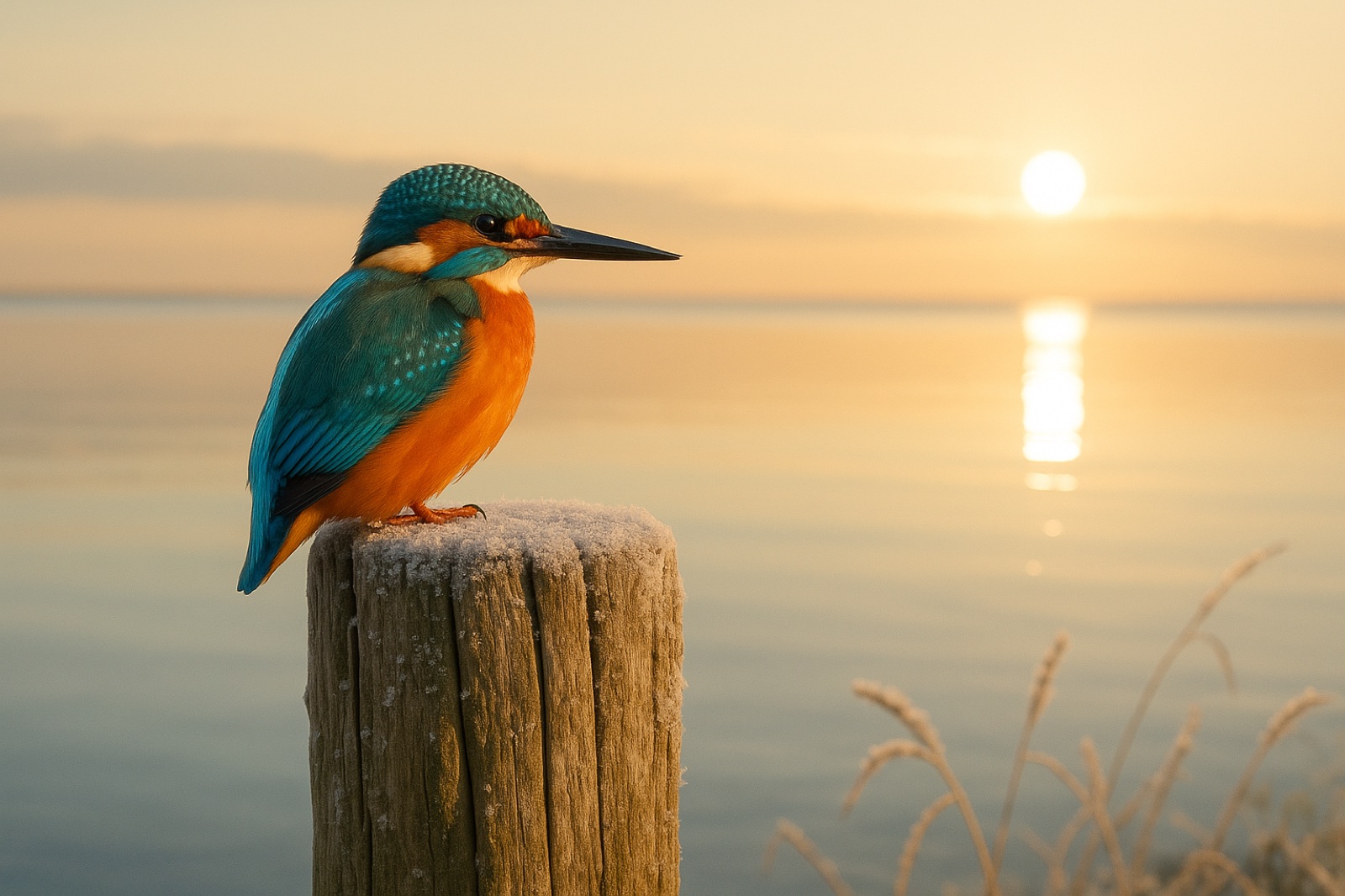
The halcyon of the old stories was later linked with the kingfisher. But the common kingfisher does not build a floating nest, and it does not lay eggs in midwinter.
Instead, it digs a tunnel into a steep bank of earth, usually beside a river or stream. At the end of that tunnel is a small room where it lays its eggs. It breeds in the warmer months, in spring and summer, in the dark, in the dirt, out of the wind.
Many scholars think the halcyon of Greek legend was only partly a real bird. The “nest on the sea” was never something anyone actually saw. If you love the real science of how birds live and move, we dug into how birds know where to migrate, and it is just as surprising.
Still, there is something lovely in the real bird too. The kingfisher does not wait for the weather to be kind. It makes a safe, quiet place for its young by digging in low, where the storm cannot reach.
Why the Old Meaning Matters More Than the New One
The modern meaning of halcyon days says: the good times are behind you.
The old meaning said something braver: even in the worst season, there may be a stretch of calm. And it may come right in the middle, not just at the end.
There is one more thing in the myth worth seeing. The calm was not just for rest. It came so that something new could hatch. The still days had a job to do.
If you are in a hard winter of your own right now, maybe too much work, a sick parent, money running thin, or a mind that will not switch off, the second meaning is the one to hold. You do not have to wait until everything is fixed to have a few still days. A Roman poet once gave a worried friend a very similar nudge, and we wrote about it in what carpe diem really means.
How to Find Your Own Halcyon Days
- Look for small calm, not the big fix. A cup of tea before anyone else is up. Ten minutes outside. A slow walk home. When the calm comes, name it to yourself: “This is one of the still days.”
- Use the calm for one thing that matters. In the myth, the still sea was there so the eggs could hatch. Do not spend every quiet moment catching up. Give some of it to one thing you care about: a person, a rest, a hope.
- Dig in like the real kingfisher. You may not be able to stop the weather. But you can make one small, safe, quiet place in your day and guard it.
- Do not give up if the calm skips a day. Even Aristotle said some winters had no halcyon days. A rough week does not mean peace is gone for good.
- Check how heavy the load really is. If you are not sure how stretched you are, our free What Is My Stress Level? check takes a few minutes and costs nothing.
Peace in the Middle of the Storm
There is another very old story about a storm that sits well beside this one.
A small fishing boat is crossing a lake at night when a sudden wind comes up. The waves are pouring over the sides. The men on board are sure they are going to sink. And the Gospels say that Jesus, who had been asleep in the back of the boat, got up and spoke to the wind and the water, and everything went still.
What stands out to me is where the peace showed up. Not on the far shore, after the trip was over. Right there in the boat, in the dark, with everyone still soaked and scared. It is the halcyon shape exactly: a calm given in the middle of the storm, not saved for after it. And it hints that peace may be something God gives, not just something we wait for the weather to hand us.
A good place to start: if you would like to notice that kind of calm in an ordinary, busy week, we made a short free guide called The Beginner’s Guide to Feeling God’s Presence Every Day. It shows you a simple way to find God in the middle of real life, even when life is loud. Get the free guide. Free.
Watching for the Still Days
So the next time someone sighs, “Those were halcyon days,” you will know the secret.
The phrase did not start as a sigh about the past. It started as a hope about the present. A hope that somewhere inside the coldest, darkest part of the year, the wind might drop for a while, and something new might be born.
Some winters it came. Some winters it did not. People watched for it anyway.
Watch for yours. They tend to arrive when you need them most, and they are worth naming when they do.
Discussion Question
Which meaning of halcyon days do you think is better: a happy time we look back on, or a calm that shows up in the middle of a hard season? Tell us what you think in the comments.
Share This
I never knew this: “halcyon days” first meant a calm in the MIDDLE of winter, not a happy time in the past. The Greeks said the sea went still for about two weeks so a bird’s eggs could hatch. https://bgodinspired.com/?p=117995
Even Aristotle admitted the halcyon days did not come every winter. People watched for them anyway, and named them when they came. That might be the best advice for a hard season I have read. https://bgodinspired.com/?p=117995
The old meaning of halcyon days: peace that shows up in the middle of the storm, not after it. https://bgodinspired.com/?p=117995
Halcyon Days: Common Questions Answered
What does halcyon days mean?
Halcyon days means a happy, peaceful period in the past that people remember fondly, such as “the halcyon days of childhood.” The phrase comes from ancient Greece, where halcyon days originally meant a stretch of calm weather in the middle of winter. The Greeks believed the sea went still around the winter solstice so that a bird called the halcyon could hatch its eggs on the water.
Where does the phrase halcyon days come from?
The phrase halcyon days comes from the Greek myth of Alcyone and Ceyx. In the Roman poet Ovid’s Metamorphoses, Alcyone’s husband Ceyx drowns in a storm, and the gods turn both of them into seabirds. Each winter, Alcyone’s father Aeolus, keeper of the winds, calms the sea while she sits on her floating nest. The Greek thinker Aristotle also wrote about halcyon days in his History of Animals, centuries before Ovid.
How many halcyon days are there?
Aristotle wrote that halcyon days are the seven days before and the seven days after the winter solstice, making fourteen days in total. The Roman poet Ovid described seven calm days in winter. Aristotle also noted that the calm did not come every year in Greece, though it came almost every year in the seas around Sicily.
Do kingfishers really nest on the sea?
No, kingfishers do not nest on the sea. The common kingfisher digs a tunnel into a steep earth bank, usually beside a river or stream, and lays its eggs in a small chamber at the end of the tunnel. Kingfishers breed in spring and summer, not in midwinter. The floating nest of the halcyon legend is a myth, and the legendary halcyon was only later linked with the kingfisher.
Is halcyon days a positive phrase?
Yes, halcyon days is a positive phrase. Today it describes a happy, calm, carefree time, usually one in the past. It often carries a gentle feeling of longing, because people tend to use it about good times that are over. In its original Greek sense, halcyon days described a welcome period of calm in the middle of a stormy winter.