 0
0
 0
0
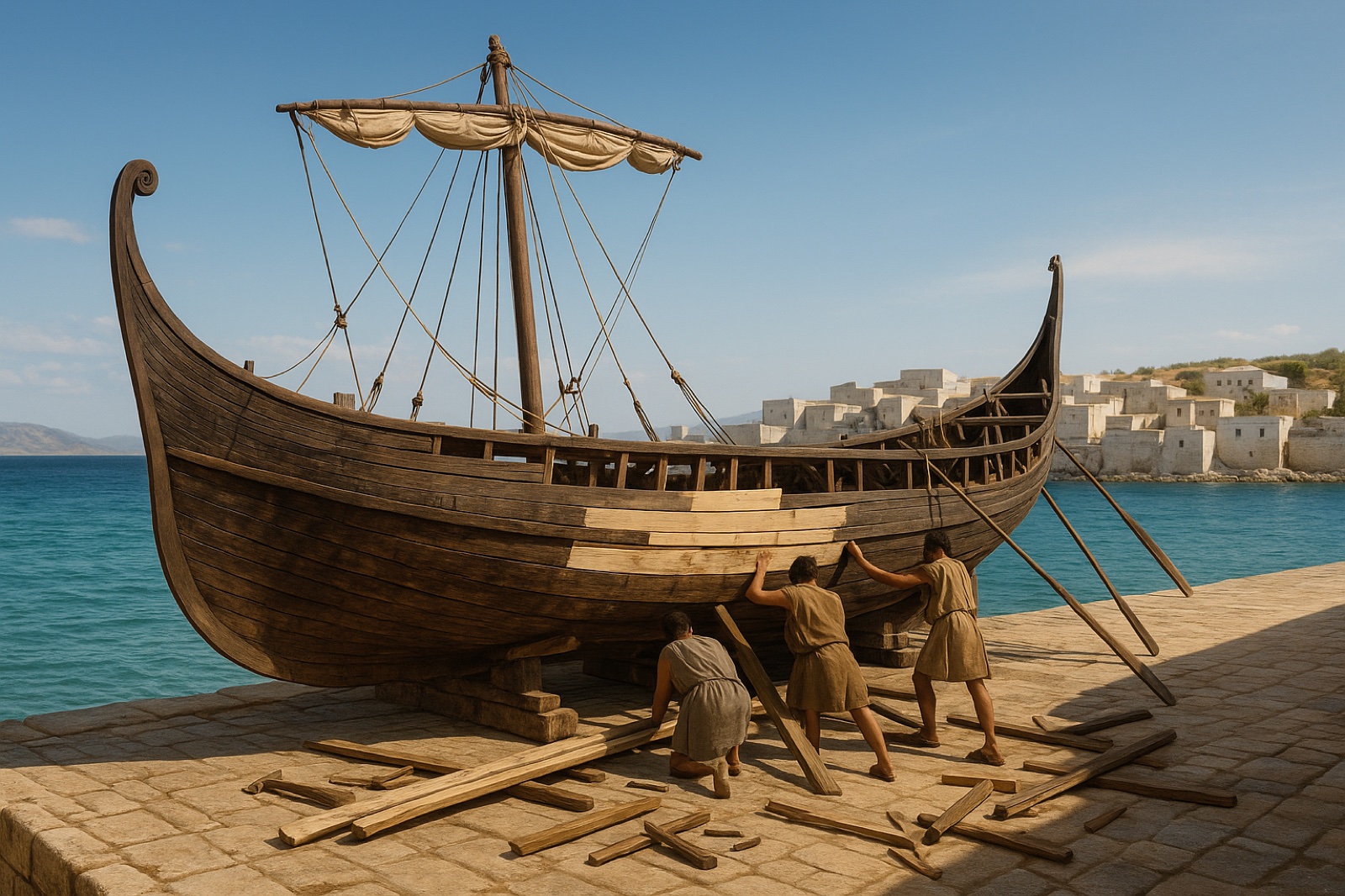
Picture an old wooden ship. One plank rots, so you swap it for a new one. A year later another plank goes. You swap that too.
Keep going long enough and one day not a single piece of the original wood is left. Every plank, every rope, every oar is new.
So here is the question. Is it still the same ship?
That is the Ship of Theseus, a puzzle that is at least two thousand years old and still has no agreed answer. A surprising number of people look it up every month, which is a lot of interest for a question about planks.
Most explanations stop at the puzzle. This one goes a little further: where the ship came from, the twist a philosopher added nearly four hundred years ago, and why the question tends to get personal the longer you sit with it.
What Is the Ship of Theseus?
The Ship of Theseus is a thought experiment about identity. It asks whether something that has had every one of its parts replaced is still the same thing.
The ship was real, or at least the Athenians said it was. Theseus was the hero of Athens, the one who sailed to Crete, faced the Minotaur, and brought the city’s young people home alive. The Greek writer Plutarch, in his life of Theseus, says the Athenians kept that ship for centuries, down to the time of a ruler named Demetrius of Phalerum, which places it in the late 300s BC.
Here is how Plutarch describes the upkeep: “They took away the old timbers from time to time, and put new and sound ones in their places.” Then he adds that the ship became “a standing illustration for the philosophers,” with some saying it stayed the same and others saying it did not.
So the argument is not modern. People were already having it on the docks of Athens.
The Ship That Kept Socrates Alive
Here is a part of the story most explanations leave out.
The Athenians did not keep the ship as a museum piece. They used it. Every year they sent it to the island of Delos on a thank-you voyage, keeping a promise the city believed Theseus had made. From the moment a priest placed a garland on its stern until the ship came home again, Athens was in a holy season, and no public execution was allowed.
In the year Socrates was condemned to death, that garland went on the day before his trial. Plato tells the story at the very start of his dialogue Phaedo. Because the ship was away, Socrates sat in prison for weeks instead of dying at once. His friends got those extra days with him. His last conversations, the ones Plato wrote down, happened because a ship full of replaced planks was out at sea.
So the ship at the center of the great puzzle about identity also bought time for the man best known for saying that the unexamined life is not worth living. You could not make that up.
The Twist Hobbes Added
For a long time the puzzle had one ship. Then in 1655 the English philosopher Thomas Hobbes gave it a second one.
Suppose, he said, that every time an old plank was pulled out, somebody kept it. And suppose that person later put all the old planks back together in the same order. Now you have two ships: the repaired one still sailing, and a rebuilt one made of every original piece.
Which is the real Ship of Theseus?
If you say “the one with the original wood,” then the ship Athens had been sailing all along was a copy. If you say “the one that kept sailing,” then a ship built from every original plank is somehow not the original. Hobbes wrote that you cannot call both of them the same ship, because then there would be “two ships numerically the same, which is absurd.”
His own answer is the part people skip. Hobbes said it depends on what you are asking about. If “the ship” means a pile of particular timbers, then the rebuilt one wins. If “the ship” means the thing Athens kept, sailed and named, then the repaired one wins. The puzzle has no answer until you decide what the name is pointing at.
Why the Ship of Theseus Follows You Home
Once you know the puzzle, you see it everywhere.
- Grandfather’s axe. Three new handles and two new heads, and still “grandfather’s axe.”
- Bands. A group that has swapped every member since its first record, still touring under the same name.
- Cities. Not one building from the founding still standing, and nobody doubts it is the same city.
- Your own body. You may have heard that every cell in you is replaced every seven years. That is not true. Some brain cells, and the cells in the lens of your eye, stay with you for life. But a great deal of the material you were made of ten years ago really is gone, swapped out plank by plank.
That last one is where it stops being a parlour game.
The person who made the choice you still wince at: are they you? The person you were at twenty, who believed things you no longer believe: same person? If you have changed almost everything about yourself, who did the changing, and what stayed?
Plutarch’s own name for the puzzle is telling. He did not call it the question of ships. He called it the question of growth. The ancient worry was never really about timber. It was about living things, which are always changing, and whether anything in them holds.
Some people land here with relief: if nothing original is left, maybe the old mistakes belong to someone else. Others land here with a kind of dread: if nothing holds, then nothing I did was ever really mine, and neither is anything I do now. If that second feeling is familiar, you are not alone in it. We wrote about the strange fact that people feel they have wasted their life at eighteen and at thirty-five alike.
What Is Your Keel?
Shipwrights have a quiet answer to the puzzle that philosophers rarely mention. A ship is not built plank by plank from anywhere. It is built around a keel, the long timber down the middle that everything else is fastened to. You can replace planks for a lifetime. Take out the keel and you do not have a repaired ship. You have a pile of wood.
So the honest version of the question is not “how much of me has changed?” It is “what is my keel?” What is the thing everything else is fastened to? For many people it is a handful of values they would not trade, and it is worth knowing which ones. Our free What Are My Core Values? quiz takes a few minutes and is a decent way to find out. For others it is the people who have known them all the way through, which is close to what the southern African idea of ubuntu means: a person is a person through other people.
Hobbes’s conclusion, that identity depends on who is doing the naming, turns out to be very old wisdom in a new coat. There is a letter, written nearly two thousand years ago by a man named Paul who had done things he could not undo, that says something stranger than “you have been repaired.” It says that when a person turns toward God, they are not the old ship with new planks. They are a new creation. The old has gone. And yet the same God who knew the old one goes on calling them by name. Paul did not become somebody else. The naming held, and that is exactly why the new could begin.
That is the Ship of Theseus answered from the other end. Not “which planks are original?” but “who keeps the name?” If you are held by someone who knew you before the planks were changed and is still calling you theirs, then changing is not a loss of self. It is the self being kept.
A good place to start: if the idea of being known all the way through, before and after the changes, landed somewhere in you, we made a short free guide called The Beginner’s Guide to Feeling God’s Presence Every Day. It is a simple video and companion PDF for noticing God in ordinary moments, including the ones where you are not sure who you are anymore. Get the free guide. Free.
The Planks Were Always Going to Change
Nobody has settled the Ship of Theseus, and it is probably better that way. A puzzle with no answer is a puzzle you keep thinking about, and this one has been doing useful work for over two thousand years.
But notice what the Athenians actually did. They did not argue about the planks. They replaced them, every time, so that the ship could sail to Delos again. The ship was never defined by its timber. It was defined by what it was for and by who kept it.
The next time you catch yourself wondering whether you are still the person who did the thing, or whether anything of you is left after all the changes, remember the ship. The planks were always going to change. That was the whole point of keeping it.
Discussion Question
In Hobbes’s version, which one is the real Ship of Theseus: the repaired ship that kept sailing, or the ship rebuilt from all the original planks? Tell us which you would pick, and why, in the comments.
Share This
Did not know this: the Ship of Theseus was a real ship Athens kept sailing, and it is the reason Socrates’s execution was delayed for weeks. Good read: https://bgodinspired.com/?p=117666
Hobbes’s version of the Ship of Theseus has TWO ships, and his actual answer is not “same” or “different.” It is “depends what you mean by the name.” Changed how I think about it. https://bgodinspired.com/?p=117666
“The ship was never defined by its planks. It was defined by what it was for and who kept it.” Best take on the Ship of Theseus I have read, and it got weirdly personal at the end. https://bgodinspired.com/?p=117666
Questions People Ask About the Ship of Theseus
What is the Ship of Theseus in simple terms?
The Ship of Theseus is a thought experiment about identity. Imagine a wooden ship whose rotting planks are replaced one at a time until no original wood remains. The puzzle asks whether it is still the same ship. The Greek writer Plutarch recorded the puzzle in his life of Theseus, where he says the Athenians kept the hero’s ship for centuries by replacing old timbers with new ones, and that philosophers disagreed about whether it remained the same vessel.
Who came up with the Ship of Theseus?
The earliest surviving account is from the Greek biographer Plutarch, writing around the end of the first century AD, in his Life of Theseus. He reports that the Athenians preserved Theseus’s ship down to the time of Demetrius of Phalerum in the late 300s BC by swapping out old planks for new ones, and that it became “a standing illustration for the philosophers.” Plutarch calls it a question about growth, not ships, which suggests the debate was already old when he wrote it down.
What did Thomas Hobbes add to the Ship of Theseus?
In 1655, in his book Elements of Philosophy (De Corpore), Thomas Hobbes added a second ship. He imagined someone saving every original plank as it was removed and later rebuilding a ship from them in the same order. That gives two candidates: the repaired ship that kept sailing and the rebuilt ship made of all the original wood. Hobbes said they cannot both be the same ship, calling that “absurd,” and concluded that the answer depends on what the name “the ship” is taken to refer to, its matter or its form and function.
Is there an answer to the Ship of Theseus?
There is no single agreed answer. Some philosophers say identity follows the matter, so the ship with the original planks is the real one. Others say identity follows form, function and continuity, so the repaired ship that kept sailing is the real one. Hobbes argued the question cannot be settled until you decide what the name is pointing at. In everyday life, people usually treat something as the same if it keeps its purpose and its continuous history, which is why a city, a band, or a person is still called by the same name after most of its parts have changed.
What does the Ship of Theseus have to do with Socrates?
According to Plato’s dialogue Phaedo, the ship the Athenians identified as Theseus’s was sent to the island of Delos every year on a sacred voyage. During that voyage no public executions were allowed in Athens. The ship’s stern was garlanded the day before Socrates’s trial in 399 BC, so his execution was delayed until it returned, which is why he spent weeks in prison and had the final conversations that Plato recorded.