 0
0
 0
0
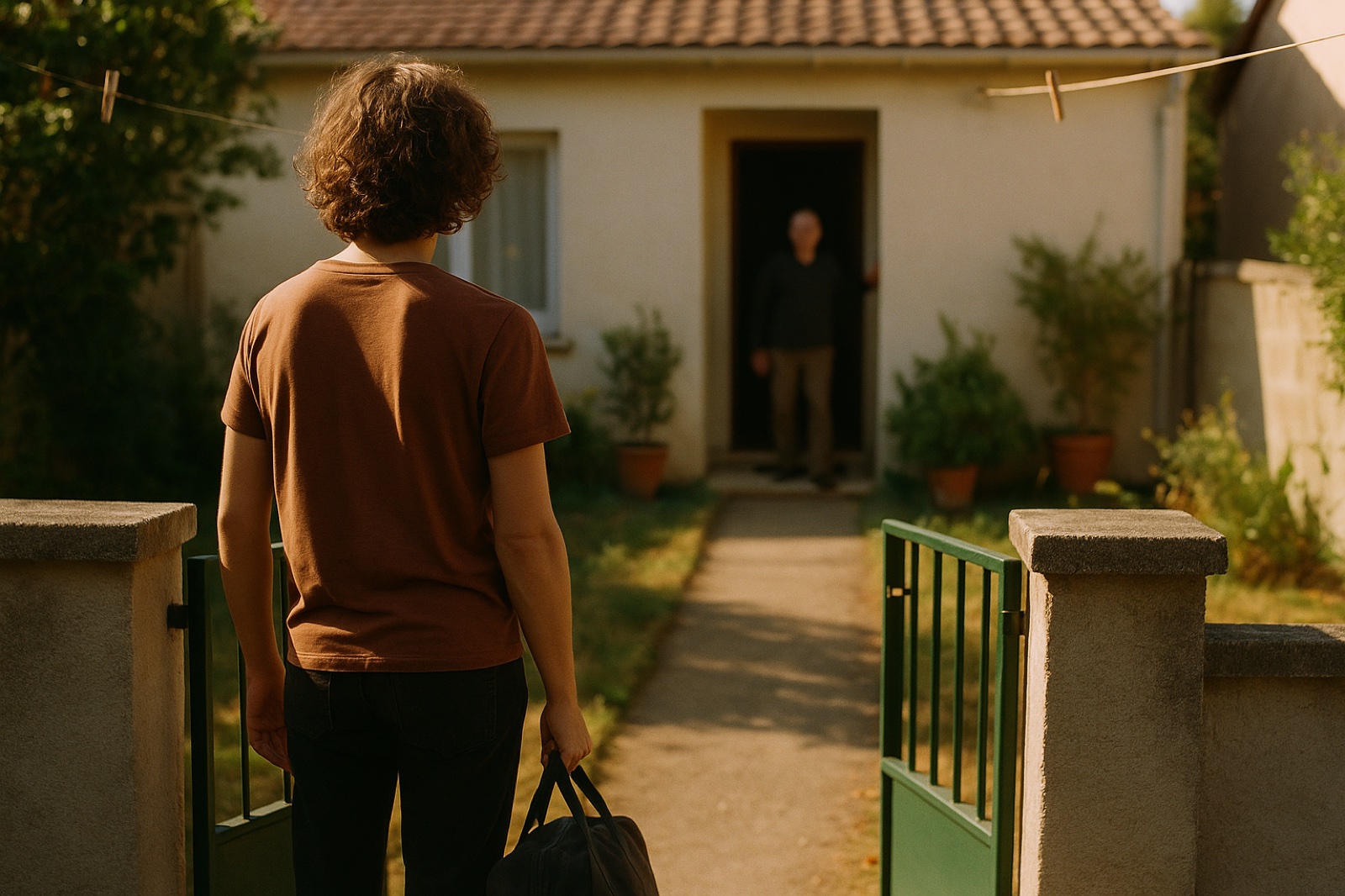
Your phone lights up with a name you used to call first. Mum. Dad. You watch it ring until it stops.
Or maybe that part is already over. Maybe it has been months since you spoke. Then one Sunday someone reads, “Honour thy father and thy mother,” and your stomach drops. You start to wonder if the distance that finally let you breathe is the thing God is most upset with you about.
If you are asking whether no contact with parents is biblical, you are probably not asking out of spite. People who don’t care don’t search for this. You are asking because you want to do right by God and stay safe, and it feels like you have to pick one.
The Bible has a story about exactly this. And there is one line in it that almost everyone reads past.
What “Honor Your Father and Mother” Actually Asks
Start with the words themselves. Exodus 20:12 says: “Honour thy father and thy mother: that thy days may be long upon the land which the LORD thy God giveth thee.”
Notice what the command says, and what it doesn’t. It says honor. The Hebrew verb comes from a root that means “heavy.” To honor someone is to give them their real weight, to never treat their life as if it doesn’t count. We looked at that word closely in Can You Honor a Parent You Haven’t Forgiven?, so here is the short version: honor is about weight, not about access.
Paul makes the same difference clear. In Ephesians 6:1 he writes, “Children, obey your parents in the Lord: for this is right.” Then, in the very next verse, he quotes the commandment: “Honour thy father and mother.” Obey is the word for children still being raised. Verse 4 speaks to fathers about their “nurture.” Honor is the word that follows you for the rest of your life.
So the question isn’t really “Am I allowed to stop obeying?” You’re a grown adult. The real question is harder: can you honor someone you can no longer safely be near?
That is where David comes in.
The Man David Called “My Father”
King Saul was not a stranger to David. After David’s victory over the Philistines, “Saul gave him Michal his daughter to wife” (1 Samuel 18:27). Saul was his king, his employer, and his father-in-law.
He was also trying to kill him. One evening, while David played music for him, “Saul sought to smite David even to the wall with the javelin” (1 Samuel 19:10). The verse ends simply: “David fled, and escaped that night.”
For years after that, Saul hunted him. Then one day Saul walked into a cave in the wilderness, not knowing David and his men were hiding deep inside. David crept close and cut off a corner of Saul’s robe. He could have ended everything. He didn’t.
Instead he stepped out and called after the king: “Moreover, my father, see, yea, see the skirt of thy robe in my hand” (1 Samuel 24:11).
My father. In that culture it was also a respectful way to speak to an older man in authority, and Saul truly was family by marriage. Either way, David chose that word on purpose, to the man who was trying to kill him.
And look at how he finished the same sentence: “yet thou huntest my soul to take it.” David didn’t pretend. He gave Saul his title and his weight, and in the same breath he named the harm out loud. Honor, in David’s mouth, was never the same thing as silence.
The Line Everyone Reads Past: “Saul Went Home; But David…”
What happens next is moving. Saul breaks down. “Is this thy voice, my son David? And Saul lifted up his voice, and wept” (1 Samuel 24:16). Then he says something few angry parents ever say: “Thou art more righteous than I: for thou hast rewarded me good, whereas I have rewarded thee evil” (1 Samuel 24:17).
That is a real apology. Tears. A confession. If this were a film, this is where they walk home together.
Here is how the chapter actually ends:
“And David sware unto Saul. And Saul went home; but David and his men gat them up unto the hold.” (1 Samuel 24:22)
Saul went home. David went back to the stronghold.
David accepted the apology. He even made Saul a promise. But he did not treat a tearful moment as proof that it was safe to go back. And two chapters later, Saul was out hunting him again, with three thousand men (1 Samuel 26:2).
The same thing happens a second time. David spares Saul’s life again. Saul says, “I have sinned: return, my son David: for I will no more do thee harm” (1 Samuel 26:21).
Watch what David does. He has taken Saul’s spear as proof that he could have killed him. And he answers: “Behold the king’s spear! and let one of the young men come over and fetch it” (1 Samuel 26:22). He won’t even walk across the valley to hand it back. Let someone come and get it.
Then the Bible says, “So David went on his way, and Saul returned to his place” (1 Samuel 26:25). In the next verse David tells himself, “I shall now perish one day by the hand of Saul” (1 Samuel 27:1), and he leaves the country. “And it was told Saul that David was fled to Gath: and he sought no more again for him” (1 Samuel 27:4).
The Bible records no other meeting between them. The next David hears of Saul is a messenger bringing news of his death on Mount Gilboa (2 Samuel 1).
At the Same Time, David Was Protecting His Own Parents
This is the detail that surprised me most. Before the cave, while Saul was hunting him, David made a trip to Moab. He said to the king there: “Let my father and my mother, I pray thee, come forth, and be with you, till I know what God will do for me” (1 Samuel 22:3). And his parents “dwelt with him all the while that David was in the hold” (1 Samuel 22:4).
So in the very same season, David was honoring two sets of parents in two completely different ways. For his own mother and father, honor meant getting them somewhere safe. For Saul, honor meant refusing to harm him, refusing to insult him, and refusing to go back.
Both were honor. Neither looked like pretending everything was fine.
Honor That Kept Going After the Distance
Distance was not where David’s honor stopped. When Saul died, David did not celebrate. He wrote a lament for him: “Saul and Jonathan were lovely and pleasant in their lives” (2 Samuel 1:23). Not a word about the javelin.
Years later, as king, David asked, “Is there yet any that is left of the house of Saul, that I may shew him kindness for Jonathan’s sake?” (2 Samuel 9:1). He found Saul’s grandson, Mephibosheth, gave back all of Saul’s land, and had him eat at the king’s table for the rest of his life.
The text says David did it for Jonathan’s sake, his friend and Saul’s son. But remember the promise David made in that cave? Saul had asked him, “Swear now therefore unto me by the LORD, that thou wilt not cut off my seed after me” (1 Samuel 24:21). David kept that promise, years later, for a man he never saw again.
That is honor with real weight. It never needed him to walk back into range of the spear.
So, Is Going No Contact With Your Parents Biblical?
Here is the honest answer. The Bible does not hand down a ruling for your family. It doesn’t tell you to cut anyone off, and it doesn’t tell you to walk back into harm. Anyone who uses a verse to force either choice on you is using scripture as a weapon, and that is not what it is for.
What the Bible does show you is this: honoring a parent and keeping your distance from a parent were never opposites. David did both, for years, and scripture never once scolds him for it.
And David’s story gives you a way to test your own heart, whatever you decide:
- Am I telling the truth about what happened? David said, “yet thou huntest my soul.” He didn’t shrink it.
- Am I refusing to strike back? David had the robe and the spear in his hand, and used neither.
- Am I still giving them their weight? David still said “my father.” He still grieved. He still kept his promise.
Some people keep all three and still need no contact. Some find that a smaller boundary is enough: shorter visits, no staying the night, contact only by message. Some find, after time, that a door can open again. None of those is automatically holier than the others. The question is whether honor is still alive in you, not how many kilometres sit between you.
If what you are facing is abuse, please hear this plainly: your safety comes first, and God is not asking you to stay where you are being harmed. If you are in danger right now, contact your local emergency number. Find A Helpline lists free, confidential helplines by country.
And if you are carrying guilt either way, whether for leaving or for staying, you might find it helps to look at where your heart actually is with our free Am I Ready to Forgive? check. Forgiveness and reconnecting aren’t the same thing, and it can be a relief to see that on the page.
There is one more verse for the person who feels they have lost a parent while that parent is still alive. It is David’s own song: “When my father and my mother forsake me, then the LORD will take me up” (Psalm 27:10). Whatever happened in your family, you are not an orphan to God. That kind of grief is real, too. We wrote about it in Grieving Someone Who’s Still Alive.
Actions to Take
- Write David’s sentence for your own story. Two lines, in your notes app. Line one: what really happened, said plainly. Line two: what you refuse to do in return. It turns a fog of guilt into something you can actually look at.
- Choose one act of honor that costs you no access. Pray for your parent by name for one minute. Or decide today that you won’t speak about them with contempt to anyone. Distance doesn’t have to mean dishonor.
- If you are weighing some contact, find your “young man to fetch the spear.” Write down one safe form of contact that doesn’t put you back in range: a short letter, a birthday message, word passed through a trusted relative. Then decide, without pressure, whether you want to use it.
Journaling Prompts
- When you picture yourself “honoring” your parent, what image comes to mind, and where did that picture come from?
- Think of a moment when an apology or tears pulled you back before you were ready. What did your body know that your guilt didn’t?
- If God were not angry with you about this, what would you do differently this week?
A Prayer for When Honor and Distance Both Feel Heavy
God, I want to do right by my parents and I want to be safe, and some days those feel like they can’t both be true. Show me how to give them their real weight without walking back into harm. Take the guilt I carry that isn’t mine, and show me clearly any that is. Keep my mouth from contempt and my heart from striking back. And when I feel like a child with no one, remind me that You have already taken me up.
What Do You Think?
David accepted Saul’s apology and still went back to the stronghold. Do you think an apology should change whether someone is safe to be near, or are those two separate questions? Share your thoughts in the comments below.
Share This
- “Saul went home; but David went back to the stronghold.” Honoring a parent and keeping your distance were never opposites. (1 Samuel 24:22)
- I always thought “honor your father and mother” meant I had to keep showing up no matter what. Then I read what David did after Saul wept and apologized. He accepted it. And he still didn’t go home with him.
- David called the man trying to kill him “my father,” refused to hurt him, grieved him, and kept his promise to Saul’s family years later. All from a distance. That’s what honor with real weight looks like.
Questions and Answers
Is it a sin to go no contact with your parents?
The Bible does not name going no contact with a parent as a sin. The fifth commandment (Exodus 20:12) commands adults to honor their father and mother, which means giving them real weight and worth, not guaranteeing them access. In 1 Samuel 24 to 27, David honored King Saul, his father-in-law whom he called “my father,” while living apart from him for years because Saul kept trying to kill him, and scripture never rebukes David for that distance.
What does “honor your father and mother” mean for adults?
For adults, honoring your father and mother means treating their lives as weighty and valuable: not mocking or harming them, speaking of them truthfully and without contempt, and caring about their good. The Hebrew verb for honor in Exodus 20:12 comes from a root meaning “heavy.” Ephesians 6:1-2 separates the two ideas, telling children to obey their parents while quoting the commandment to honor, which continues for life.
Does the Bible say you have to reconcile with a parent who apologizes?
The Bible does not say an apology requires returning to a relationship that is unsafe. In 1 Samuel 24:16-22, King Saul wept and admitted he had done evil to David. David accepted his words and made him a promise, yet the text says “Saul went home; but David and his men gat them up unto the hold.” Two chapters later, Saul was hunting David again. Forgiveness can be given freely while trust and safety are rebuilt slowly, or not at all.
What does Psalm 27:10 mean for someone estranged from their parents?
Psalm 27:10 says, “When my father and my mother forsake me, then the LORD will take me up.” It means that even when the relationship with a mother or father breaks down, a person is not left without a parent in God. For someone estranged from their family, whether they chose the distance or had it forced on them, the verse is a promise of belonging, not a verdict about who was at fault.