 0
0
 0
0
Someone probably handed you a verse.
Maybe it was kind. Maybe it wasn’t. Maybe it came in a message from a relative, or from the front of a room, or from a page you found at two in the morning when the house was finally quiet.
That is who this is for. Not the person still deciding what to do. The person who already knows how it ended — and who keeps running into the Matthew 19 divorce passage in the mouths of people who sound very sure about it.
So here is something in that passage worth slowing down for. The men who asked Jesus about divorce were not asking for help. They were setting a trap. And Jesus did not answer the question they asked.
The Matthew 19 divorce question was a trap, not a request
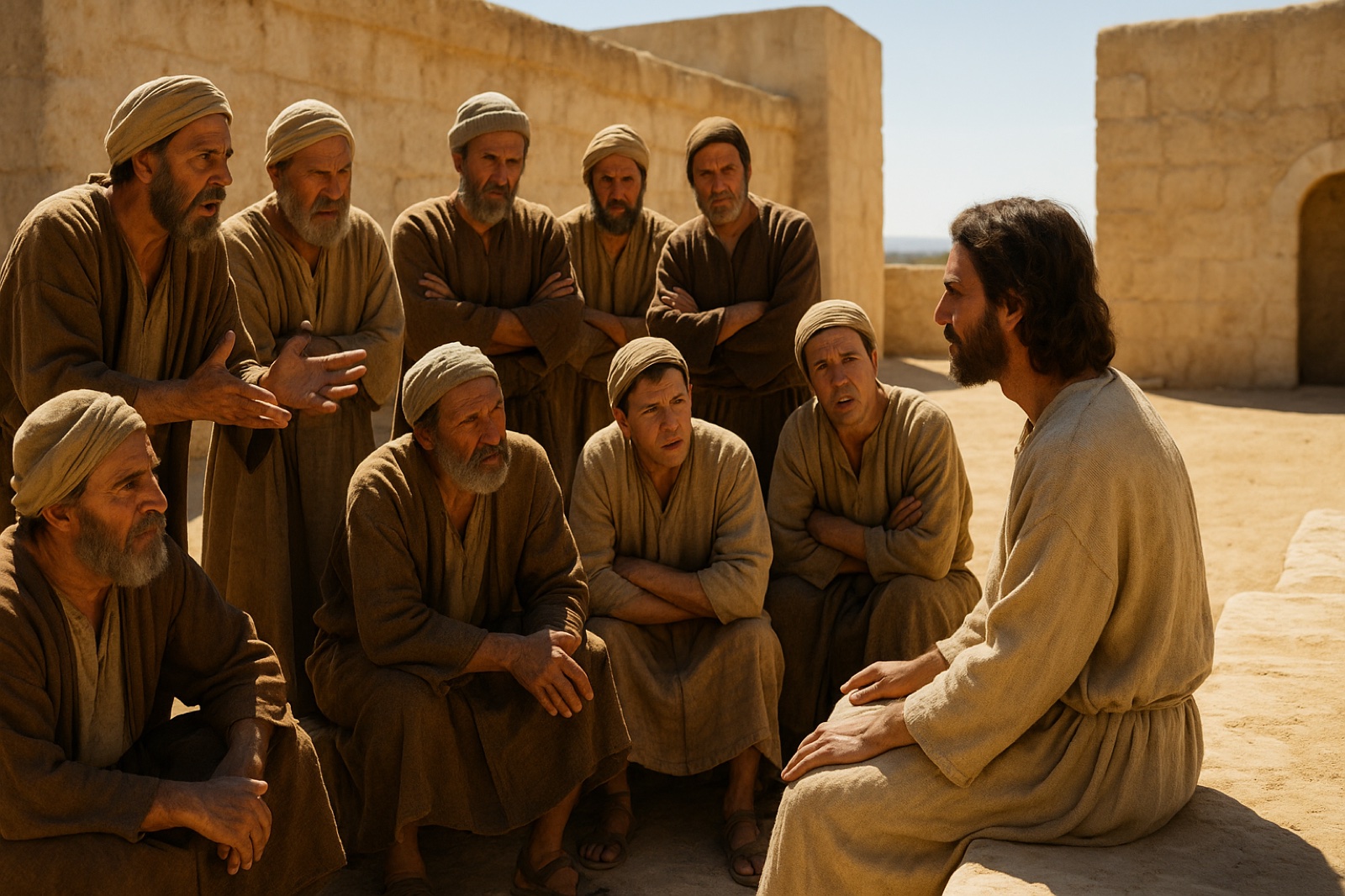
The scene opens like this:
“The Pharisees also came unto him, tempting him, and saying unto him, Is it lawful for a man to put away his wife for every cause?” — Matthew 19:3, KJV
Read the first few words again. Tempting him. The text tells you the motive before it tells you the question. This was not a couple in trouble coming for counsel. This was a test.
And the test had a specific shape. Look at the last three words: for every cause. That phrase is not vague filler. It lands squarely on one side of an argument that was already running loudly in that world.
Two schools, one verse, and an argument Jesus walked into
The whole debate hung on one line from the law:
“When a man hath taken a wife, and married her, and it come to pass that she find no favour in his eyes, because he hath found some uncleanness in her: then let him write her a bill of divorcement, and give it in her hand, and send her out of his house.” — Deuteronomy 24:1, KJV
Everything turned on two words: some uncleanness. How bad did it have to be?
Jewish tradition preserves the answer in the Mishnah, a collection written down roughly two centuries after Jesus but recording the positions of rabbinic schools that were already famous in His lifetime. In the tractate Gittin, the disagreement is laid out plainly. The school of Shammai held that a man could only divorce his wife over sexual unfaithfulness. The school of Hillel held he could divorce her over far less — the example given is that she spoiled his dinner. Rabbi Akiva went further still: if he found someone he liked looking at more.
So when the Pharisees ask about “every cause,” they are not asking a neutral question. They are asking Jesus to pick a team. Answer strictly and He offends the popular position. Answer loosely and He looks like He doesn’t take the law seriously. Either way, the trap closes.
This matters for you for one simple reason. The most quoted passage about divorce in the Bible did not begin as a pastoral conversation about a hurting marriage. It began as a technical argument between men about how little a wife had to do wrong.
Jesus answered a question nobody had asked
Here is what He said back:
“And he answered and said unto them, Have ye not read, that he which made them at the beginning made them male and female, And said, For this cause shall a man leave father and mother, and shall cleave to his wife: and they twain shall be one flesh? Wherefore they are no more twain, but one flesh. What therefore God hath joined together, let not man put asunder.” — Matthew 19:4-6, KJV
Notice what is missing. There is no ruling on “every cause.” No line drawn. No side taken.
Instead He reaches past their whole argument and picks up a sentence from the very beginning of the Bible — “Therefore shall a man leave his father and his mother, and shall cleave unto his wife: and they shall be one flesh” (Genesis 2:24, KJV).
Think about when that sentence was written down in the story. Before Deuteronomy 24. Before any bill of divorcement existed. Before there was any rule about ending a marriage at all, because there was nothing yet to end.
They asked Him where the exit was. He described the door they had walked through.
One word the Pharisees changed — and Jesus changed back
This is the detail almost everyone reads straight past, and it is sitting right there in plain English.
The Pharisees push back:
“They say unto him, Why did Moses then command to give a writing of divorcement, and to put her away?” — Matthew 19:7, KJV
And Jesus answers:
“He saith unto them, Moses because of the hardness of your hearts suffered you to put away your wives: but from the beginning it was not so.” — Matthew 19:8, KJV
They said command. He said suffered — which in older English means permitted, allowed, put up with.
One word apart, and it changes the entire nature of the rule. A command is something God wants. A permission is something God allows because people were already getting hurt. Jesus is saying the provision exists because hearts got hard, not because God ever designed it that way.
That is not a small correction. The Pharisees were using a concession as if it were an ideal. Jesus put it back where it belonged.
The hard sentence, said plainly
It would be dishonest to stop before verse 9, so here it is, whole:
“And I say unto you, Whosoever shall put away his wife, except it be for fornication, and shall marry another, committeth adultery: and whoso marrieth her which is put away doth commit adultery.” — Matthew 19:9, KJV
That is a hard saying and it deserves to be read rather than smoothed over. Jesus did take marriage more seriously than either school in the debate, not less. He was not casual about it.
But notice where it lands in the conversation. It comes after He has already refused to make marriage a question of exit clauses. It is not His definition of marriage. It is His closing word to men who wanted permission slips. The exception clause in that verse rests on a Greek word that carries more weight than most English Bibles show, which we looked at in detail in what Jesus actually said about divorce and the Greek word most Bibles flatten.
The verse most quoted at divorced people says something different in the King James
If you have been carrying this a while, you have almost certainly had Malachi 2:16 quoted at you as four words: God hates divorce. It gets used like a gavel.
So read the King James rendering slowly:
“For the LORD, the God of Israel, saith that he hateth putting away: for one covereth violence with his garment, saith the LORD of hosts: therefore take heed to your spirit, that ye deal not treacherously.” — Malachi 2:16, KJV
Two things are worth saying carefully here, and no more than that.
First, this is one of the genuinely disputed sentences in the Hebrew Bible. Translators do not agree on it. Some render it as God saying “I hate divorce.” Others render it as a description of a man who hates his wife and divorces her. The Hebrew allows both readings, and honest scholars land on different sides. Anyone who tells you the meaning is obvious is telling you about their confidence, not about the text.
Second — and this is the part that is not disputed at all — whatever that verse means, the rest of it is about treachery. Covering violence with a garment. Dealing treacherously. It is aimed at people doing harm and hiding it, not at people who were harmed.
And here is the quiet detail: when Jesus was directly asked about divorce, He did not quote Malachi. He quoted Genesis.
Even the disciples thought it was too much
The reaction in the next verse is almost funny, and it is easy to miss:
“His disciples say unto him, If the case of the man be so with his wife, it is not good to marry.” — Matthew 19:10, KJV
His own friends heard all of that and said: then why get married at all?
Which tells you something useful. If this passage has ever landed on you as heavy, you are not reading it wrong. It landed heavy on the people standing right next to Him too.
The Turn: He was not measuring marriages. He was defending them.
Every rule-list about divorce — ancient or modern — treats a marriage as a contract you understand by reading its exit clauses. What breaks it. What voids it. What counts.
Jesus refused that entire frame. Asked what ends a marriage, He described what a marriage is. Two people joined. One flesh. Something God does, not something a court does.
They asked Jesus what ends a marriage. He answered what a marriage is.
And that changes who this passage is actually about.
If you have been reading Matthew 19 as God’s measuring tape held up against your life, read verse 8 one more time. Because of the hardness of your hearts. Jesus names the reason the provision exists: people get hurt. Hearts go hard. Something breaks that was never supposed to break.
That is not God shrugging. That is God refusing to pretend the damage isn’t real — which is the opposite of what a rule-list does. A rule-list wants to know whether your ending was permitted. Jesus was busy naming the thing that actually happened: something good was broken, and He was not going to call the breaking normal.
You were never the subject of that argument. The argument was about men looking for a permission slip. You are the person the whole thing was mourning.
What to do with this today
The most practical thing in this passage is also the simplest: Jesus would not let a marriage be defined by the sentence that ended it. Which means you do not have to let your marriage be the sentence that defines you.
That is not a way to skip the grief. Grief is the honest response to something being torn, and the passage agrees with you about that. It is a way to stop letting other people’s summaries stand in for God’s actual voice.
Actions to take
- Read Matthew 19:1-12 out loud, start to finish, in one sitting. The whole scene, not the one verse someone sent you. It takes about three minutes. Count how much of it is Jesus talking about joining, and how little is about grounds.
- Write down the exact sentence someone used on you. Type it into your phone. Underneath it, write the question that sentence was originally answering. Most of the time it will turn out to be a question about somebody else entirely.
- Say one honest sentence to God out loud — the one you have never said out loud. Not a request. Not a defence. Just the sentence. Then stop and stay there for a minute.
Journaling prompts
- When you picture God looking at your marriage, what expression do you imagine? Where did you get that expression from?
- Which sentence about your marriage do you repeat to yourself most often — and whose voice is it in?
- What is the thing you have been waiting for someone’s permission to stop carrying?
If the third one caught on something, working through our free “Am I Ready to Forgive?” assessment is a gentle place to look at it honestly — including the part where the person you have not forgiven is yourself.
A prayer for today
God, I am tired of hearing my own life used as somebody’s example. I do not know how to explain what happened, and some days I am not sure I ever will. But I would rather hear from You directly than secondhand. Stay close while I read the whole thing for myself. I am not asking to feel fixed today — I am asking not to be alone in it.
Discussion question
Why do you think people reach for a rule about divorce so much faster than they reach for the sentence Jesus actually quoted? Tell us what you think in the comments — we read every one.
Share this
- They asked Jesus what legally ends a marriage. He answered what a marriage is. Two completely different questions — and only one of them is about you.
- Matthew 19:7, the Pharisees said Moses “command”ed divorce. Matthew 19:8, Jesus said Moses “suffered” it. One word apart, and it changes the whole passage.
- When Jesus was asked about divorce, He didn’t quote the verse everyone quotes at divorced people. He quoted Genesis — a sentence written before any rule about ending a marriage existed.
Questions people ask about Matthew 19 and divorce
What does Matthew 19 say about divorce?
In Matthew 19:3-9, Pharisees ask Jesus whether it is lawful for a man to divorce his wife “for every cause.” Rather than ruling on acceptable grounds, Jesus quotes Genesis 2:24 about a man and wife becoming one flesh and says, “What therefore God hath joined together, let not man put asunder.” He then states that Moses permitted divorce “because of the hardness of your hearts,” and adds in verse 9 that divorcing except for fornication and remarrying is adultery.
Why did the Pharisees ask Jesus about divorce “for every cause”?
The phrase pointed at a live rabbinic dispute over Deuteronomy 24:1, which permits divorce when a husband finds “some uncleanness” in his wife. The Mishnah, compiled around two centuries after Jesus but recording earlier schools, preserves the disagreement: the school of Shammai limited divorce to sexual unfaithfulness, while the school of Hillel allowed it for minor faults such as spoiling a meal. Asking Jesus about “every cause” was an attempt to force Him to side with one school against the other.
Did Moses command divorce or permit it?
Matthew 19:7-8 records both claims in the same exchange. The Pharisees say Moses “command”ed a writing of divorcement. Jesus corrects the verb, saying Moses “suffered” — that is, permitted or allowed — divorce “because of the hardness of your hearts: but from the beginning it was not so.” The distinction matters: a command reflects intent, while a permission is a concession made in response to human harm.
Does Malachi 2:16 say God hates divorce?
Malachi 2:16 is one of the genuinely disputed sentences in the Hebrew Bible, and translations differ. The King James Version reads “he hateth putting away.” Some modern translations render it as God declaring “I hate divorce,” while others render it as a description of a man who hates his wife and divorces her. The Hebrew supports both readings, so the verse cannot honestly be quoted as a settled, self-evident judgment. The remainder of the verse warns against covering violence and dealing treacherously.
What does “one flesh” mean in Matthew 19:6?
“One flesh” comes from Genesis 2:24 and describes marriage as a joining that makes two people a single unit rather than two parties to an agreement. When Jesus quotes it in Matthew 19:5-6, He draws the conclusion “they are no more twain, but one flesh,” and attributes the joining to God rather than to human arrangement. The phrase defines what a marriage is, not what conditions may end one.
Can a divorced person remarry according to the Bible?
The question is answered differently across Christian traditions, and the relevant passages include Matthew 19:9, 1 Corinthians 7:10-15, and Romans 7:2-3. The wording of the passages, including what Matthew 19:9’s exception clause covers and what Paul says about a believer whose unbelieving spouse departs, is examined at length in this study of whether a divorced person can remarry.