 0
0
 0
0
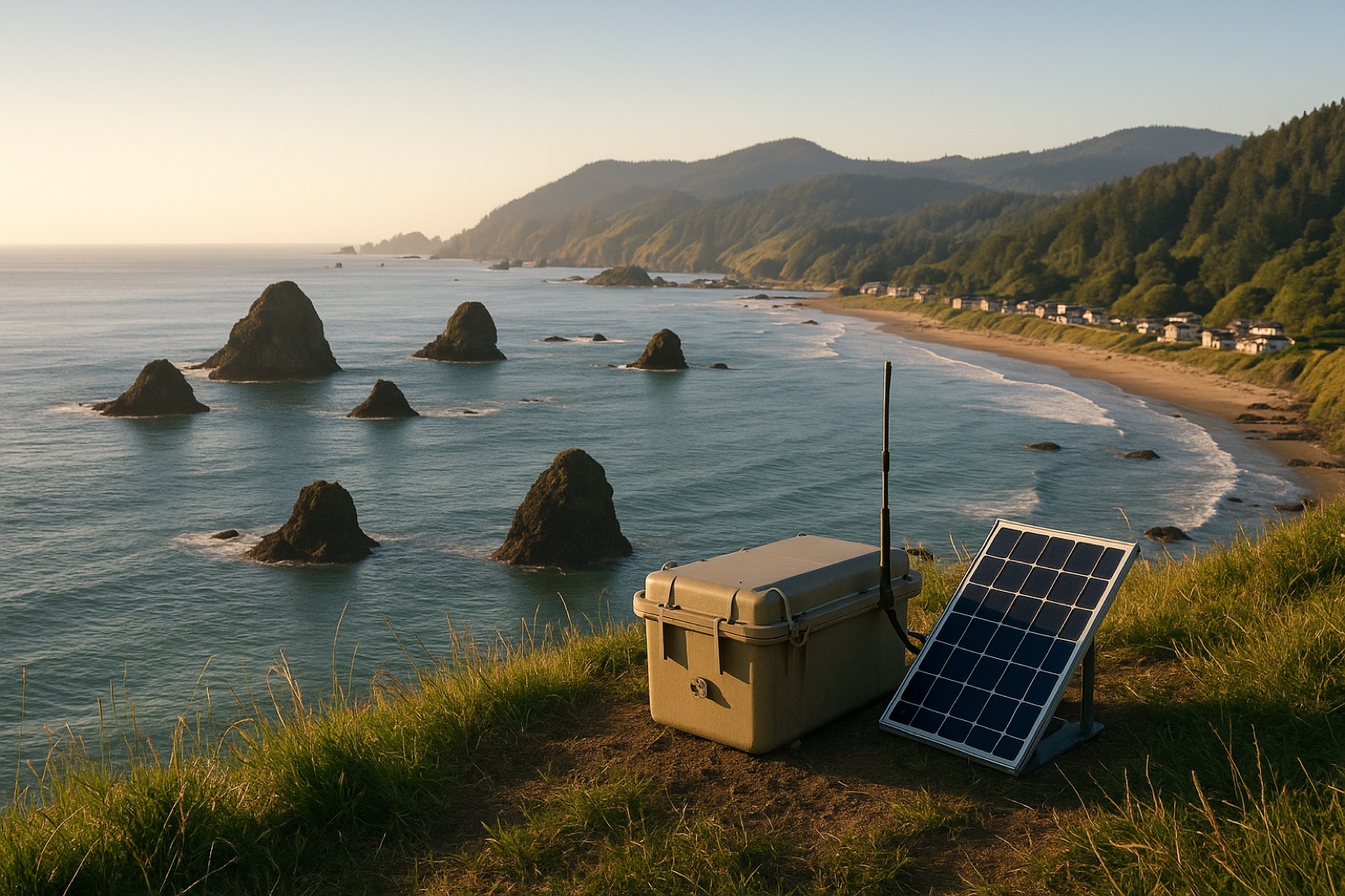
The stretch of coast sitting directly above the Cascadia megaquake zone is, on any given day, one of the quieter places on earth.
Not silent. Quiet. Northern Oregon goes long stretches without producing the small, ordinary earthquakes that seismologists use to map what is underneath a place. Nothing rattles. Nothing shows up on the instruments. If you lived there, you would have no reason to think about it at all.
That quiet turns out to be the reason nobody knew what was down there.
The Quietest Coast Was the Hardest One to Read
Seismologists usually learn the shape of a fault by listening to it. Every small earthquake sends waves through the rock, and those waves come back carrying information about what they passed through — how deep the layers sit, where they bend, what they are made of. A noisy fault is, in a strange way, a generous one. It keeps telling you about itself.
A quiet one tells you nothing. So you have to make your own noise, or wait a very long time and listen extremely carefully.
That is what a team led by Erin Wirth, a seismologist with the United States Geological Survey, set out to do. They put 192 temporary seismometers into the ground across northern Oregon — a dense grid of ears in a place where there was almost nothing to hear — and let them sit.
It is an odd kind of effort to fund. You are spending months instrumenting the boring part of the map. The whole justification is a hunch that “nothing has happened here lately” and “nothing is wrong here” are not the same sentence.
What the Cascadia Megaquake Research Actually Found
The Cascadia subduction zone is where one slab of the earth’s crust, the Juan de Fuca plate, slides underneath the edge of North America. Where those two surfaces meet is where a megathrust earthquake would eventually happen.
The question is how deep that meeting point sits — and the answer moved.
Wirth’s team estimated the slab interface near the northern Oregon coastline at roughly 20 kilometres down, about 12 miles. That is around five kilometres — three miles — shallower than earlier estimates had put it.
Five kilometres is not much on the scale of a planet. It is enough to matter to a building.
Shaking loses energy as it travels. An earthquake that ruptures closer to the surface arrives at that surface with more of its force intact, the way a sound made in the next room reaches you louder than the same sound made three rooms away. Move the rupture up three miles and everything standing above it gets a harder push.
The team’s estimate is that this could raise expected peak ground acceleration — the sharpness of the shaking — by roughly 9 to 17 percent along the northern Oregon coast.
Two honest notes about that figure, because they matter. It is a modelled estimate, not a measurement of a real earthquake; nobody has measured a Cascadia megathrust event with modern instruments. And this work was presented at the Seismological Society of America’s 2026 annual meeting, which is where research goes to be argued about, not where it goes to be settled.
What it does not change is how likely the earthquake is, or when it comes. The odds did not move. The floor did.
It Is Not Only How Deep. It Is What Kind of Ground.
Here is the part that got much less attention, and it is arguably the more interesting half.
While mapping the depth of the slab, the instruments also picked out something much closer to the surface: a deep basin of soft sediment sitting beneath the town of Tillamook. The researchers describe these as the first direct seismological constraints on that basin’s shape and depth — meaning that until now, nobody had actually measured the bowl the town is sitting in.
Loose sediment does not behave like rock when a wave passes through it. It shakes further, and it holds on. Waves get trapped inside the basin, bouncing off its edges instead of passing through, so the shaking does not just hit harder — it lasts longer. As Wirth put it, basins like this one “can amplify ground shaking during an earthquake.”
So two towns can be the same distance from the same rupture, built to the same standards, and have meaningfully different days. Not because the earthquake treated them differently. Because the ground did.
This is a familiar move in science: you learn the most about something by measuring what it does to whatever is near it. Astronomers found the fingerprint of dark matter in a distant galaxy the same way, by watching a ribbon of stars get pulled by something nobody can see. And satellites tracked a crack across a Greenland glacier for years before the ice finally let go — the break was legible long before it was audible.
None of this is unique to one American coastline, either. Subduction zones run along Japan, Chile, Indonesia, New Zealand, Alaska. Millions of people live on top of a seam like this one. Most of them, most days, on very quiet ground.
The Part That Has Nothing to Do With Oregon
There is an old story, something like two thousand years old, about two men who each built a house. Most people remember it as a warning about storms.
It isn’t. Read it slowly and the storm is the one thing the two men have in common — the same rain, the same rivers, the same wind, hitting both houses equally hard. The weather is held constant on purpose. The only variable in the whole story is what each man built on top of. One dug down to rock. One did not bother.
Nobody in that story avoids the storm. That was never on the table. The difference is entirely underneath.
Which is, more or less, what 192 seismometers spent months measuring on a quiet coast.
What You Can Actually Do With This
Almost nobody reading this lives in Tillamook, and nobody at all can choose the plate under their town.
But the thing that made this research possible was not equipment or funding. It was somebody deciding to go and find out what was underneath a place precisely because that place had been calm for a long time. The quiet was treated as a gap in the map rather than an answer.
Most of us do the reverse, and not only about geology. We check on the parts of our lives that are making noise — the loud job, the loud relationship, the loud worry at 2am — and we take silence everywhere else as a report of good health. Sometimes it is. Sometimes it is just an area where nothing has happened lately and no one has looked.
If you like this kind of question — the ones about deep time and what is underneath everything — you might enjoy our free How Old Is the Universe? explorer, which walks through how anyone claims to know a number like that at all.
The coast is still quiet this morning. It was always going to be. That was never the part that mattered.
What Do You Think?
Here is the question we keep turning over: when something in your life has been quiet for a long time, is that reassuring — or is it the exact place you should go and look?
Some people read long calm as evidence that everything is fine. Others read it as the one place nobody has checked. There is a decent case for both, and we would genuinely like to know which way you lean. Leave a comment and tell us.
Share This
- Scientists put 192 seismometers into the quietest part of the Oregon coast, on the theory that “nothing has happened here lately” and “nothing is wrong here” are not the same sentence. They were right: bgodinspired.com/index.php/nature-and-creation/cascadia-megaquake-oregon-shake-harder/
- Turns out two towns can sit the same distance from the same earthquake and have completely different days — not because of the quake, but because of what kind of ground they were standing on. That finding has been living rent-free in my head all week: bgodinspired.com/index.php/nature-and-creation/cascadia-megaquake-oregon-shake-harder/
- New research moved the fault under northern Oregon about three miles closer to the surface. It did not change how likely the earthquake is. It changed how hard it lands: bgodinspired.com/index.php/nature-and-creation/cascadia-megaquake-oregon-shake-harder/
Questions People Ask About the Cascadia Megaquake
What did the new Cascadia megaquake research find?
A team led by USGS seismologist Erin Wirth, using 192 temporary seismometers deployed across northern Oregon, estimated that the Juan de Fuca slab interface near the coastline sits about 20 kilometres (12 miles) deep — roughly five kilometres shallower than previous estimates. The team calculated that this could increase expected peak ground acceleration during a Cascadia megathrust earthquake by approximately 9 to 17 percent along the northern Oregon coast. The work was presented at the Seismological Society of America’s 2026 annual meeting.
Why does a shallower fault produce stronger shaking?
Seismic waves lose energy as they travel through rock. When a rupture happens closer to the surface, the waves have less distance to cover before they reach buildings and people, so more of the original energy arrives intact. A fault a few kilometres shallower delivers a sharper push to everything standing above it, even if the earthquake itself is identical in size.
Does this mean a Cascadia earthquake is more likely now?
No. This research concerns how hard the ground would shake, not whether or when an earthquake will happen. The estimated likelihood and timing of a Cascadia megathrust earthquake are unchanged by this work. What changed is the expected intensity of shaking at the surface in one region.
What is the sedimentary basin under Tillamook, and why does it matter?
The same seismometer array identified a deep basin of soft sediment beneath Tillamook, Oregon — described by the researchers as the first direct seismological constraints on its geometry and depth. Soft sediment shakes more than solid rock and can trap seismic waves against the edges of the basin, so shaking there may be both stronger and longer-lasting than in nearby areas sitting on firmer ground.
Where else in the world has ground like this?
Subduction zones — where one tectonic plate slides beneath another — run along Japan, Chile, Indonesia, New Zealand, Alaska and elsewhere. Sedimentary basins that amplify shaking are common worldwide, including under many major cities. The local details differ everywhere, but the underlying principle is the same: identical shaking can produce very different outcomes depending on what kind of ground it passes through.