 0
0
 0
0
Some people describe depression as sadness. The people living inside it more often describe something stranger: every day feels like the same day.
Not sad, exactly. Flat, and repeated. Monday arrives and it is somehow already Sunday. Something good happens, lands on top of an old bad thing, and gets swallowed by it. You can be told a hundred times that today is different, and some part of you simply does not receive the message.
In August 2026, a research team published something about depression and new brain cells that offers a startlingly physical explanation for that exact feeling — and the answer sits in one small, specific place.
What the study on depression and new brain cells actually found
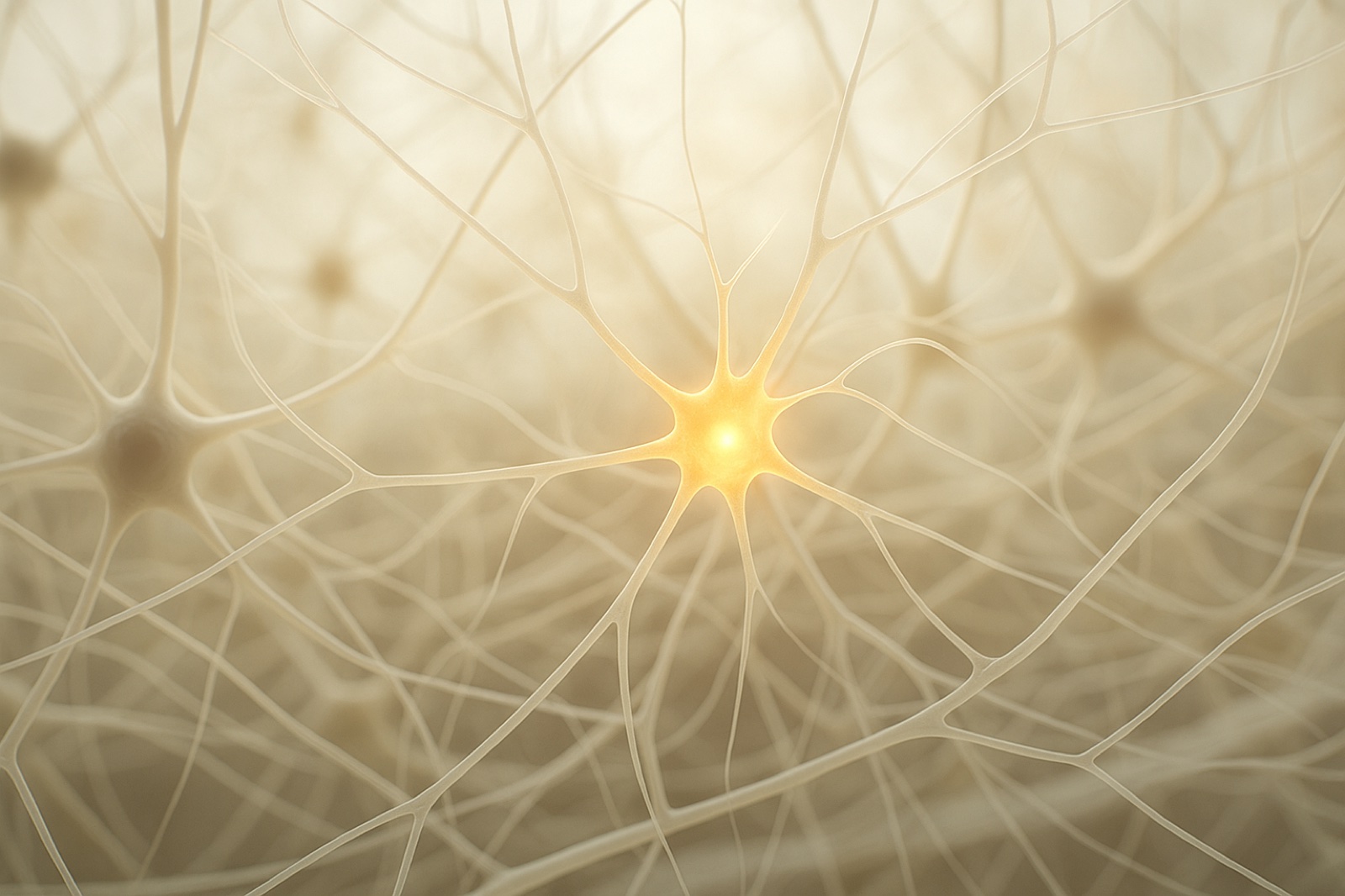
Almost every neuron you have was made before you were born. But one small, curled structure deep in the brain — the hippocampus — keeps making a trickle of brand-new neurons all through adult life.
Researchers at Columbia University examined close to half a million hippocampal cells, taken from the brain tissue of people who had lived with major depressive disorder and from people who had not. They measured which genes were switched on inside each individual cell. The work was published in the journal Nature Medicine on 21 August 2026.
In the depressed brains, that quiet production line had stopped. The researchers’ own word for it is stalled.
They also found broad molecular changes across the region — in genes that build new connections between neurons, in genes that handle cell-to-cell communication, in genes that supply energy, in genes that move cargo around inside a cell, and in genes involved in inflammation and stress response.
That list is worth reading twice. For decades, the popular story about depression was a shortage of one messenger chemical. Almost nothing on that list is a messenger chemical. Those are the brain’s construction crew, its power supply, and its delivery service.
What those new cells are actually for
Here is the part that changes the shape of everything: these newborn cells have a job, and the job has a name. It is called pattern separation.
Maura Dupont, professor of psychiatry at Columbia University Vagelos College of Physicians and Surgeons and the study’s lead researcher, described it this way: “The hippocampus is important for our ability to distinguish between similar but different memories and separate the emotional connotation of past memories and current events.”
In plain language: pattern separation is what keeps today from being filed on top of yesterday.
And the newest cells appear to be unusually good at it. “The newborn neurons seem to enhance pattern separation because they are especially responsive to new experiences and can be incorporated into new memory circuits more easily,” Dupont said.
Sit with that for a second. A brand-new neuron has nothing stored in it yet. It has no history to compare against. That is exactly why it is good at noticing that something is new — and it is the first thing depression appears to take away.
Why “just think positive” fails at the level of the hardware
When pattern separation is working, a small rejection today stays a small rejection today. When it is impaired, it does not stay anything. It merges.
Dupont gave the example plainly: with impaired pattern separation, a present moment of feeling rejected “becomes mixed with previous memories of feeling rejected.”
So the depressed brain is not only feeling worse. It may be retrieving worse. A perfectly neutral event gets pulled in and coloured by every similar-feeling memory already on file, before conscious thought has any say in it.
This is why being told to think positively so often lands as an insult rather than help. The advice is aimed at the wrong layer. Nobody can reason their way past a filing system that is merging the files before they ever get read. It is a close cousin of what happens with emotional numbness — a real mechanism that outsiders keep mistaking for an attitude.
The detail hiding in the title of the paper
The paper is called “Dysregulated adult hippocampal neurogenesis in major depressive disorders.”
Read the last word again. Disorders. Plural.
The diagnosis is singular. Every form, every clinic, every conversation says major depressive disorder, one thing, one name. The researchers quietly pluralised it — and they say directly that their findings suggest depression is not just one disease. Different people may be arriving at the same set of symptoms down genuinely different biological roads.
That is the most humane sentence in the whole study, and almost nobody has repeated it.
If you have ever taken something that changed a friend’s life and felt nothing at all from it, you have probably filed that away as a personal failure. It may simply be that you and your friend do not have the same illness. That reframing also takes a great deal of heat out of an old and painful argument about whether it is wrong to take medication for anxiety or depression — treating a body that is not producing what it needs was never the moral question people made it into.
What this does not mean
This kind of finding travels badly, so three honest limits.
It is a photograph, not a film. This is post-mortem tissue. Nobody watched neurogenesis stall inside a living person; they saw what the tissue looked like afterwards.
Nobody has shown which way the arrow points. Whether stalled neurogenesis helps cause depression, or is something depression does to the brain, is not settled by this work. Dupont was explicit about the boundary: “It’s important to emphasize that we do not yet know the complete mechanism, particularly in humans.”
It is not a treatment, and it is not a verdict on anyone’s character. Nothing here says depression is weak effort, or ingratitude, or a lack of faith. And nothing here is a reason to delay getting help from someone who can actually give it. If you want a quiet, private place to start putting words to what you are carrying, our free How Anxious Am I? assessment takes a couple of minutes and nobody sees your answers — but it is a starting point, not a substitute for a real person.
A supply, not a stockpile
There is something quietly strange about what this research describes, and it took a while to name it.
The thing that keeps a person able to bear their own life is not a reserve. It is a supply. A small, daily, continuous delivery of brand-new cells whose entire purpose is to register that today is not yesterday. The brain does not save these up in good seasons and spend them in bad ones. It makes them, quietly, over and over — and depression is what it looks like when the making stops.
Which is a very old idea wearing very new clothes. Long before anyone had a microscope, a man sitting in the ruins of a destroyed city wrote down the only reason he could find to keep going. The mercy holding him up, he said, was not something he had stored. It arrived new every morning. He was not given a supply for the year. He was given today, and then tomorrow he was given today again.
He was describing God. The researchers are describing cells. But they are both pointing at the same architecture — a life that stays liveable not because you once saved up enough of something, but because something keeps arriving.
You do not have to feel it for it to be true
None of this makes a hard morning easier. Knowing the name of a mechanism has never once lifted the weight off anybody’s chest.
But it does change what a hard morning means. If your days have been blurring into one long grey day, that is not evidence that nothing new is coming. It may mean the part of you that recognises new things is exhausted. Those are two completely different problems, and the second one is not a flaw in your character.
You are not required to feel that today is new in order for it to be new. Tomorrow morning will still be a morning you have never lived before — whether or not your brain gets around to filing it that way.
Your Turn
For most of the last few decades, the public story about depression was “a chemical imbalance.” This research points somewhere else entirely — to construction, energy, cargo and repair, not chemistry. Do you think that “chemical imbalance” shorthand helped people understand what they were going through, or did it quietly teach a lot of us to think of ourselves as broken machines? Tell us in the comments — we read every one.
Share This
Short: Depression may not just make you feel worse — it may make you remember worse. New research found the brain cells that keep today from blurring into yesterday stall out in depression. https://bgodinspired.com/index.php/health-and-wellness/depression-and-new-brain-cells/
Thoughtful: The paper is titled “major depressive disorders.” Plural. The researchers pluralised a diagnosis everyone treats as one thing, because their data suggests people arrive at the same symptoms by different biological roads. If a treatment that saved your friend did nothing for you, that was never a failure of willpower. https://bgodinspired.com/index.php/health-and-wellness/depression-and-new-brain-cells/
Personal: “Every day feels like the same day” turns out to have a physical description. The newest cells in your brain exist to notice that today is not yesterday — and depression appears to stop the brain making them. Worth a read if you have ever been told to just think positive. https://bgodinspired.com/index.php/health-and-wellness/depression-and-new-brain-cells/
Questions People Are Asking
Does depression stop the brain from making new brain cells?
A study published in Nature Medicine on 21 August 2026 by researchers at Columbia University found that adult hippocampal neurogenesis — the making of new neurons in the hippocampus — is disrupted in people with major depressive disorder. The team analysed close to half a million hippocampal cells from post-mortem brain tissue and found the process had stalled, alongside broad changes in genes governing cell connections, energy supply, cargo transport, inflammation and stress response. The researchers stopped short of saying depression causes the stall; lead researcher Maura Dupont stated that the complete mechanism, particularly in humans, is not yet known.
What is pattern separation in the brain?
Pattern separation is the hippocampus’s ability to store similar-but-different memories separately, so a new experience is not filed on top of an older one. It also keeps the emotional weight of a past memory from attaching itself to a present event. Newly born neurons are thought to strengthen pattern separation because they respond especially strongly to new experience and are folded into new memory circuits more easily. When pattern separation is impaired, similar memories and their emotions blur together, so a neutral moment today can be experienced as a repeat of an old rejection.
Why doesn’t “just think positive” work for depression?
Research on the depressed brain suggests the difficulty is not only in how a person feels but in how memory is retrieved. If pattern separation is impaired, present events are merged with older, similar, painful memories before conscious thought is involved at all. Advice to think positively targets conscious thought, which sits downstream of that merging — which is part of why it tends to land as dismissive rather than helpful to someone who is genuinely unwell.
Is depression one illness or several?
The Columbia study’s paper is titled “Dysregulated adult hippocampal neurogenesis in major depressive disorders” — plural — and the researchers say their findings suggest depression is not just one disease, but may involve several different biological pathways. That could help explain why depression looks so different from person to person, and why a treatment that works well for one person may do nothing at all for another.
Does this research mean depression is a spiritual failure?
No. The findings describe a biological process visible in brain tissue — cell production, gene activity, energy supply and inflammation. Nothing in the research supports the idea that depression is caused by weak faith, insufficient effort or a lack of gratitude, and nothing in it suggests that prayer or positive thinking should replace medical care. Getting treatment and holding onto faith have never been competing options.