 0
0
 0
0
There is a small, ordinary happiness in watching birds eat something you put out for them. You fill the tray, you step back, and within a few minutes there is noise and colour and squabbling where a minute ago there was an empty garden. It costs almost nothing. It feels like a good thing to do.
That is exactly why the current advice is so uncomfortable. Bird feeders and bird flu have turned out to be connected, and the people asking us to think twice are not anti-bird campaigners. They are the researchers who have spent their careers studying why we feed birds in the first place.
Bird Feeders and Bird Flu: What Actually Changed
Australia is living through an H5N1 outbreak in its wild birds. The numbers coming out of it are hard to read. More than a thousand crested terns have died. The virus has also been detected in a long-nosed fur seal, reported as the first detection in a mainland mammal there. Conservationists are watching the orange-bellied parrot, a species already close to the edge, with real fear.
Into that situation comes a habit almost nobody thinks of as risky. Writing in The Conversation in August 2026, Darryl Jones — Professor Emeritus at Griffith University, and one of the researchers who has studied wild bird feeding most closely — pointed out that around half of Australian households feed wild birds, many of them every single day.
Half. Every day. That is not a hobby. That is infrastructure.
Why the Crowding Is the Whole Problem
Here is the part worth slowing down for, because it is not about the food at all.
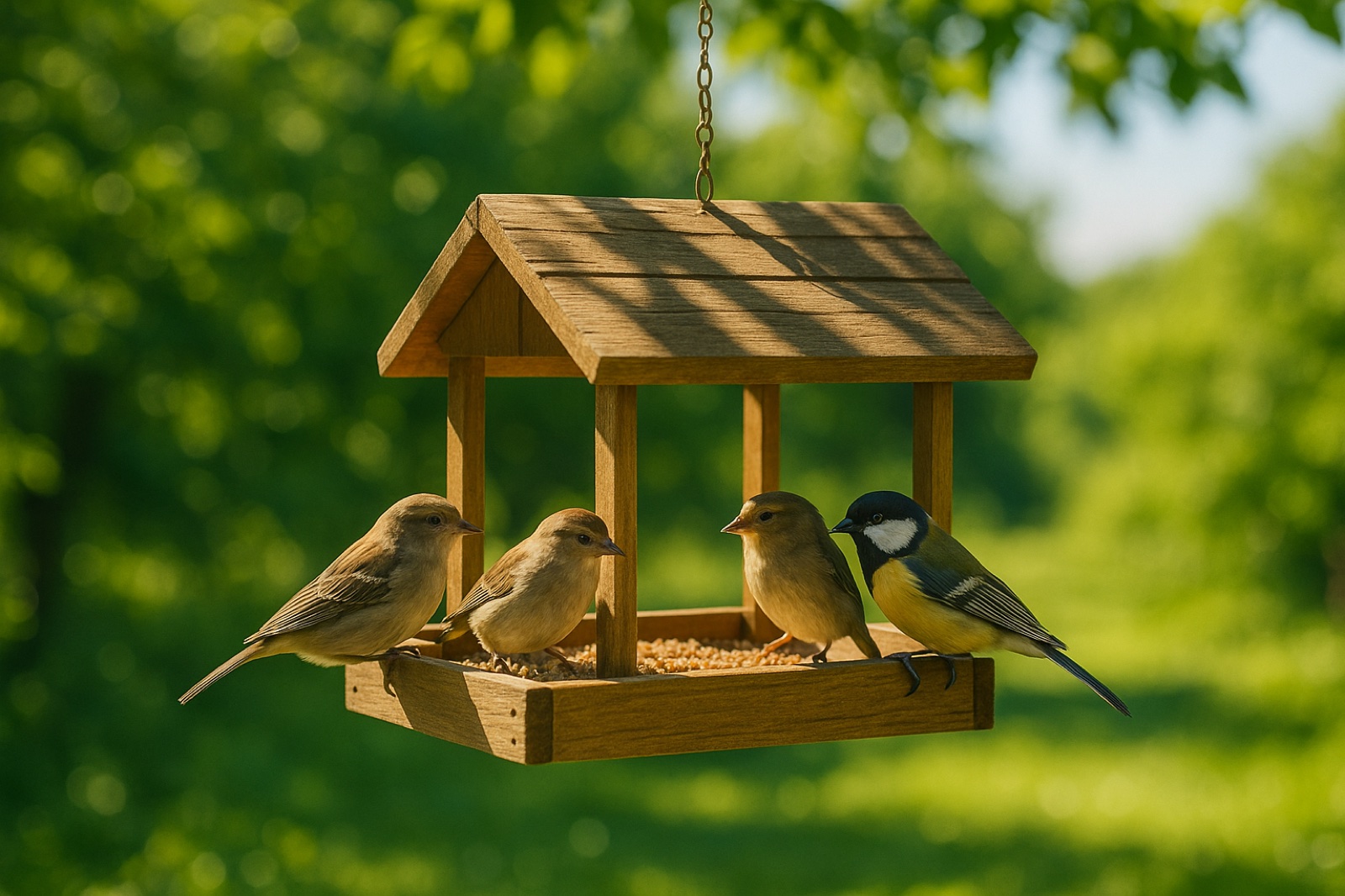
A feeder does something that almost never happens in the wild: it brings many birds, often of several different species, into one small space, over and over, at a predictable time. In an ordinary garden those same birds would be spread across a wide area, feeding on different things, mostly avoiding each other.
The feeder collapses all of that distance into a single tray. Beaks touch the same surface. Droppings land where the next bird will feed. Species that would rarely meet stand shoulder to shoulder.
Jones describes that as the making of a transmission hotspot right on the back deck. Not because anyone did anything wrong. Because the design of the thing — gather everyone in one place, reliably, daily — is the same design a virus would choose if a virus could choose.
It is a strange thing to sit with. The generosity is real. The harm is also real. And the harm runs through the generosity, not around it.
The Detail Almost Nobody Mentions: The Birds Do Not Really Need It
This is the part that reframes everything, and it is buried in the middle of the advice rather than shouted at the top of it.
Most birds that visit a feeder get most of their nutrition from natural sources anyway — insects, worms, the ordinary living of a bird. The seed in the tray is a supplement. In most cases it is not the difference between a bird eating and a bird starving.
Which raises a quiet question. If the birds were mostly fine before the feeder went up, who was the feeder actually for?
The honest answer, most of the time, is us. We put out food because we want the birds to come. We want the flash of colour at the window on a grey morning. We want to feel connected to something wild and alive that has no reason to trust us and comes anyway. There is nothing shameful in that — it is one of the most human wants there is, and it is the same pull that makes people keep houseplants they forget to water or stop on a walk to watch a heron stand still. If that pull interests you, the idea of biophilia is worth an afternoon.
But it does change the maths. When a thing we do mostly for our own comfort starts costing the animals we say we love, the trade is not as balanced as it felt.
So Should You Stop Feeding Birds?
The advice is graduated, not absolute, and it is worth reporting accurately rather than as a ban.
Stopping altogether is described as the most effective option. But for people who are going to keep feeding — and many will — the guidance from Jones, echoed by the Biodiversity Council Australia, comes down to a short list:
- Put out less food. Smaller amounts mean fewer birds gathering at once, and gathering is the risk.
- Stop hand-feeding entirely. Direct contact is the shortest possible route for a virus.
- Clean the feeding surfaces regularly, using ordinary household bleach.
- Watch what is actually happening. If birds look sick, or dead birds turn up nearby, that is the moment to stop and report it locally, not to top the tray back up.
Note what none of that is. It is not a rule handed down to make you feel bad about a kind habit. It is a set of adjustments that take the same impulse — I want to look after these birds — and point it at what the birds actually need instead of what feels good to give them.
That distinction is old, and it is much bigger than birds. There is a thread running through some of the oldest wisdom we have that real care is not measured by how generous it feels to the giver. It is measured by whether the thing being cared for is genuinely better off. Love, in that older sense, always begins by asking what the other one actually needs — which is frequently not the thing we most enjoy handing over. It is a harder standard than kindness. It is also the only one that holds up when kindness turns out to have a cost.
You can see the same principle at work in the people who spend decades on it. Someone who has walked the same beach before dawn for thirty years protecting sea turtles in Lebanon is not doing it for the feeling. Most mornings there is no feeling. There is just the work, and the animals are better off for it.
What This Looks Like If You Have Never Owned a Feeder
Most people reading this do not have a bird table in the garden, and this still applies.
The pattern is everywhere. The food scraps left out for street dogs that pull them into traffic. The bread thrown to ducks that they cannot properly digest. The money handed over quickly because handing it over felt better than asking what would actually help. In each case the giving is genuine and the outcome is worse than doing nothing, and no amount of good intention converts one into the other.
The fix is never to stop caring. It is to spend thirty seconds finding out what the thing in front of you actually needs — and then to be willing to give that instead, even when it is less fun, less visible, and produces no colour at the window.
The garden is quieter that way. The birds are not.
Something to Think About
When a kind habit turns out to be causing harm, where should the line be — stop completely, or adjust and carry on? Tell us where you land in the comments.
Share This
- “Half of Australian households feed wild birds. Turns out the feeder gathers species together in a way that never happens in nature — which is exactly how bird flu travels. The kindness is real. So is the cost.”
- “The detail that got me: most birds that visit feeders get most of their food from insects and worms anyway. The feeder was never really for the birds. It was for us.”
- “Good intentions and good outcomes are not the same thing, and finding out the difference takes about thirty seconds of actually asking.”
Questions People Ask
Can bird feeders spread bird flu?
Yes. Bird feeders concentrate many birds, often of several different species, into one small space repeatedly and predictably — a level of crowding that rarely occurs in nature. Because H5N1 passes between birds through close contact and contaminated surfaces, a feeding station can act as a transmission hotspot. Darryl Jones, Professor Emeritus at Griffith University, made this point in The Conversation in August 2026 during Australia’s H5N1 outbreak in wild birds.
Should I stop feeding birds during a bird flu outbreak?
Stopping altogether is described by researchers as the most effective way to reduce the risk. For people who continue, the recommended precautions are to put out smaller amounts of food, stop hand-feeding entirely, and clean all feeding surfaces and equipment regularly with ordinary household bleach. If sick or dead birds appear nearby, the advice is to stop feeding and report it to local wildlife authorities.
Do birds actually depend on garden feeders to survive?
Generally, no. Most birds that visit garden feeders obtain most of their nutrition from natural sources such as insects and worms, which makes supplementary feeding largely unnecessary for their survival in normal conditions. Feeding is better understood as something people do for the pleasure of contact with wildlife than as a rescue operation for the birds.
How bad is the H5N1 situation in Australian wildlife?
Reporting from August 2026 describes more than a thousand crested terns killed by H5N1, along with a detection in a long-nosed fur seal that was reported as the first in a mainland mammal there. Conservationists have raised particular concern for the orange-bellied parrot, a species already at high risk of extinction, because a single outbreak in a small population can be catastrophic.
Is it safe to clean a bird feeder myself?
Standard guidance is to clean feeding surfaces and equipment regularly using domestic bleach. Sensible precautions apply to any cleaning job involving wild animal droppings: do it outdoors, avoid touching your face, and wash your hands thoroughly afterwards. If you find dead or visibly sick birds, do not handle them — contact your local wildlife or agriculture authority instead.