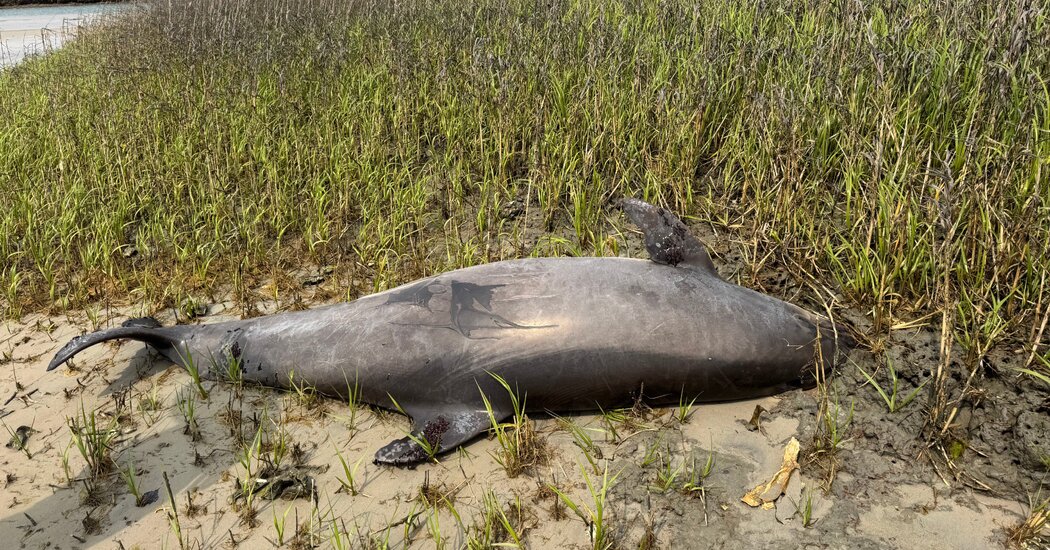
Federal Authorities Seek Culprit Behind Decapitated Dolphin Incident in North Carolina
In a shocking case of marine cruelty, federal authorities are investigating the decapitation of an 8-foot bottlenose dolphin found on Lea-Hutaff Island, North Carolina, on April 15. The National Oceanic and Atmospheric Administration (NOAA) has announced a reward of up to $20,000 for information that could lead to the responsible parties.
The gruesome discovery was made on a remote, undeveloped barrier island accessible only by boat. Initial examinations conducted by officials from the University of North Carolina at Wilmington have concluded that the dolphin’s head was intentionally severed after it became stranded. Such actions not only shock the community but also raise serious ethical concerns regarding our treatment of wildlife.
Further complicating the situation, the dolphin was found to carry Brucella, a bacterium linked to the infectious disease brucellosis, which can potentially spread to humans through direct contact. With symptoms that include fever and malaise, this aspect of the incident underscores the interconnectedness of humans and nature, echoing the biblical principle of stewardship. As stewards of God’s creation, we are called to act with compassion and care toward all living beings (Genesis 1:28).
Authorities are currently awaiting the results of a necropsy to determine the dolphin’s cause of death. It’s important to note that while bottlenose dolphins are not classified as endangered, they are protected under the Marine Mammal Protection Act, which prohibits harm to these cherished creatures.
As this investigation unfolds, those with any pertinent information are urged to contact the NOAA Enforcement Hotline. While tips can be submitted anonymously, to qualify for the reward, individuals must provide their names and contact details.
In reflecting on this troubling event, we may find ourselves contemplating the teachings of Jesus, particularly His emphasis on compassion and the importance of caring for all of God’s creations. In Matthew 6:26, we read, “Look at the birds of the air; they do not sow or reap or store away in barns, and yet your heavenly Father feeds them. Are you not much more valuable than they?” This verse reminds us of our intrinsic value in God’s eyes and our responsibility to protect the life around us.
The question arises: How can we, in our everyday lives, promote kindness and stewardship in our community? Perhaps it starts by advocating for our environment and the creatures who inhabit it.
As we reflect on this incident, let it be a reminder not only of the importance of protecting wildlife but also of the broader significance of compassion. Each act of kindness contributes to a world reflecting God’s love—a world we are all called to nurture and protect.
Explore and dig up answers yourself with our BGodInspired Bible Tools! Be careful – each interaction is like a new treasure hunt… you can get lost for hours 🙂